


How Inverter Batteries Support Emergency Power Systems?
Home How Inverter Batteries Support Emergency Power Systems? by Power cuts don’t always come with a warning. Sometimes it’s a planned outage, other times it’s a storm knocking down lines or an overload in your area. Either way, the lights go out, fans stop spinning, and your home comes to a sudden standstill. That’s when you realise how important an emergency power supply inverter really is. But without reliable inverter batteries for emergency power, even the most advanced inverters won’t keep your home running for long. The battery stores energy and supplies power when the main supply is gone. The right battery can offer uninterrupted power for hours, and the wrong one for a few minutes. In this blog, let’s understand how inverter and battery works to make emergency power systems dependable, why they are important for home backup, and what to consider when choosing a home backup inverter and batteries. Why Inverter Batteries for Emergency Power Matter? Consider the inverter as the brain, and the battery as the heart. When the power drops, the inverter switches to battery mode and supplies electricity for your home. But if the battery isn’t up to the task, your backup collapses quickly. Good inverter batteries for emergency power ensure: Longer backup time during outages. Continuous power supply for sensitive applications such as Wi-Fi routers, medical equipment, or a refrigerator. Safety and reliability, so you don’t have to worry about leaks or failures when you rely on it most for power.Choosing the right inverter for home backup power is not only about the inverter itself. It is equally about the battery you pair it with. Why is Livfast a Reliable Choice? At Livfast, we are not just making batteries; we are making solutions for Indian households that deal with unpredictable electricity every day. With advanced features and industry-leading warranties, our range is built for people who don’t want to compromise on safety or backup time. If you need an inverter for home backup power or a complete emergency power supply inverter system, Livfast provides the perfect solution to your requirements. Features That Make Livfast Batteries Stand Out All our Livfast batteries are built keeping emergencies and real-world conditions in mind. Instead of just promising backup, these batteries are engineered to last, protect, and perform. Let’s look at the features that set them apart: 25% Extra Backup We’ve designed our batteries with a unique blend of active materials and active carbon. The result? 25% more backup than traditional batteries, built-in with mobility. So that means your fans, lights, and appliances keep working for longer even during extended power outages. High-Performance Output When the power goes out, you need more than backup; you need reliability. The Livfast battery is designed with robust technology that provides continuous and strong output, ensuring that your equipment runs smoothly without any interruption. Deep Cycle Efficiency Our battery is designed for deep discharge cycles, which means that it can be used for a longer and more effective period before recharge. It adds years to their lives and gives you a better price for your investment. Low Maintenance Design Nobody wants to service their battery continuously. Livfast batteries are made with a low-maintenance design that remains durable in all weather conditions, giving you reliable performance day after day. Livfast’s Range of Inverter Batteries Not every home has the same backup needs. Some need power for a few lights and fans during short outages. Others need full support for ACs, fridges, and office equipment during frequent, long cuts. Livfast’s inverter batteries cover every scenario. Some options are: Short Tubular Inverter Batteries Compact design for homes with limited space. Moderate backup for areas with short power cuts. Low maintenance keeps hassles minimal. Best for: Small homes or offices with basic backup needs. Tall Tubular Inverter Batteries Higher capacity for longer power cuts. Durable build for heavy usage. 3D Grid tech ensures performance doesn’t drop over time. Best for: Medium to large households and commercial setups. Short Tubular Jumbo Inverter Batteries Enhanced capacity compared to standard short tubulars. Compact yet powerful, perfect for smaller homes. Best for: Small to medium homes facing frequent cuts but limited in space.With such a wide range, there’s a home backup inverter battery for every lifestyle and locality. How Inverter Batteries Support Emergency Power Systems? When we think of “emergency power,” we often think of hospitals or big office buildings. But emergencies can happen at home too, like your child’s online class, your work-from-home schedule, or keeping medicine and other items cool in the refrigerator. Here’s how inverter batteries play a role in these everyday emergencies: Providing electricity to vital appliances, such as fans, Wi-Fi, and lights. Ensuring that sensitive equipment does not get any damage during outages or sudden supply returns. Longer backups mean you can work and rest without worrying about power outages. How to Choose the Right Inverter Battery? Do not buy the first battery model you see. Here are a few questions to guide your choice: What’s your backup requirement? If you only need lights and fans, a short tubular battery works. For bigger appliances, go for tall tubular. How long are power cuts in your area? Moderate cuts = short tubular. Long and frequent cuts = tall tubular or jumbo. How much space do you have? If space is limited, you may want a short tubular model. What’s your budget? Do not cut on budget as it is about value over time. A slight higher upfront cost investment with long warranties can help you save costs in the long run. Final Thoughts With the right inverter batteries for emergency power, you can run equipment during the longest outage in your home, office, or shops. From compact short tubular models to high-capacity tall tubular and jumbo designs, Livfast has a battery for every situation. So the next time power cuts threaten your routine, you’ll be ready with reliable inverter batteries for home backup, powering your emergency system. Related Blogs Modern Inverter Battery SafetyCommon Inverter MistakesInverter
Can You Run an AC on an Inverter: Best Options for Your Home?
Home Can You Run an AC on an Inverter: Best Options for Your Home? by If you have experienced a power cut during the summer while your air conditioner was running, you know that feeling. All of a sudden, you are left with hot and sticky air. The only thing that pops into mind is, can an inverter keep my AC running? So the answer is “yes,” you can run air conditioners on an inverter. But there’s more to it than just plugging and running it. You will need to know about inverter capacity, the correct battery, and which models are designed for heavy-duty appliances such as air conditioners. In this blog, we’ll break it all down for you. How inverters for AC work, what capacity you need, and the best inverter options for your home. We will also discuss a few inverter options to help you stay cool and comfortable during power cuts. Why Running an AC on an Inverter Needs Special Attention? Not all inverters are made equal. While a regular inverter can power your lights, fans, and maybe a TV, an air conditioner is different. ACs require a high surge of power at startup and then a steady load to keep cooling. That means you need: An inverter capacity for AC that can handle high loads. A reliable inverter battery for AC that won’t drain in minutes. A high-efficiency inverter that stabilises power for sensitive appliances.Without these, you’ll end up with tripped systems, frequent shutdowns, or even damage to your AC. Understanding Inverter Capacity for AC Here’s where many people get confused. An air conditioner of 1.5 tons does not consume electricity like a fan. It consumes about 1.5–2 kWh per hour, depending on its type (window or split) and energy efficiency. To operate it smoothly, there should be an inverter of at least 2000 VA capacity (sometimes more for combined appliances). That’s why generic inverters don’t work here; you need heavy-duty models designed for bigger loads. Why Battery Matters Also? Think of the inverter as the engine and the battery as the fuel tank. Without the right inverter battery for AC, you’ll run out of backup faster than you think. For ACs, tubular or lithium batteries with higher AH ratings are better suited because they: Provide longer backup time. Handle deep discharge cycles better. Support multiple high-load appliances at once.Therefore, if you are selecting the best inverter to run AC, do not consider just the VA rating. Pair with a high-capacity battery, and you will enjoy uninterrupted cooling. Why Do Livfast Heavy Capacity Inverters Stand Out? Here’s where Livfast steps in. Our range of high-capacity inverters is designed with one thing in mind: handling tough appliances without a hiccup. Whether it’s an AC, a water pump, or any other heavy-duty appliance, our inverters don’t buckle under pressure. Some standout features of Livfast’s heavy-capacity inverter range are: Precision Power Control – Advanced microcontroller technology ensures stable voltage, precise frequency, and complete appliance protection. Reliable Low Voltage Charging – Efficient charging at mains as low as 100V±5V, so you never lose performance. Heavy-Duty Performance – Operate appliances such as ACs, pumps, printers, and other heavy equipment easily at home or in a commercial setup. Extended Backup – Paired with Livfast batteries, enjoy longer backup and peace of mind during prolonged power cuts.Simply put, these are not just inverters. They are power partners built for demanding homes and offices. Best Livfast Options for Running Your AC Now let’s get specific. If you’re looking for the best inverter for running AC, here are some Livfast models worth your attention. 1. Power Station PS2500 The PS2500 is built with pure sine wave technology that keeps your appliances running smoothly and quietly. It is a reliable option for homes that need steady backup power requirements. Additionally, safety features like auto reset, deep discharge protection, and reverse polarity protection ensure your inverter runs without any disturbance. Capacity: 2000 VA / 24V Technology: Pure sine wave for efficient and safe operation Warranty: 24 months 2. Power Station PS3000 If you need more power without jumping for the heaviest model, the PS3000 offers a balanced option. Its sine wave technology ensures smooth equipment performance, while the security features like auto reset, deep discharge protection, and battery overcharge provide peace of mind. Capacity: 2500 VA / 24V Technology: Pure sine wave with noiseless operation Warranty: 24 months 3. Power Station PS4000 The PS4000 steps up with higher capacity and the same advanced sine wave technology. Designed to save electricity and protect equipment, it provides maximum protection with features such as reverse polarity protection and an in-built fault display. Capacity: 3500 VA / 36V Technology: Pure sine wave for stable and quiet operation Warranty: 24 months Choosing the Best Inverter for Your Home So how do you pick? Start by asking: How many appliances will run with the AC? (Just the AC, or fridge and lights too?) What’s the usual power cut duration in your area? (Short power cuts = smaller battery, longer power cuts = bigger battery.) What’s your budget? (Because investing in the right inverter and battery combo upfront saves you headaches later.) Final Thoughts Running an AC on an inverter is possible when you pick the right combination of capacity, battery, and brand. With power cuts a reality in many parts of India, having an inverter for AC isn’t just about comfort; it’s about keeping your home running smoothly. With Livfast high-capacity inverters, you get the reliability, adaptability, and intelligent functions that can handle heavy appliances such as ACs. Our heavy-duty inverters suit various needs and price ranges. The next time the lights go out, you won’t have to sweat it. Your AC will keep humming, thanks to the right inverter powering your home. Check out our complete range or reach out to your nearest Livfast dealer to know more. Related Blogs Regular vs High-Capacity InverterInverter Load Calculation GuideModern Inverter Battery SafetyWhat is an Inverter FAQ’s General Can a 1.5-ton AC run on

Safety Features in Modern Inverter Batteries
Home Safety Features in Modern Inverter Batteries by Power outages are not a rare occurrence in Indian households. An inverter battery quite battles these situations, being the silent heroes of modern spaces. They keep all devices running smoothly, from fans to lights to your laptop, and offer optimum performance with good back up duration. These are all the main inverter battery features that anyone would think of. What often gets overlooked is the inverter battery safety features. Modern inverters are not just designed with great storage power but also with reliability and security. Advanced technologies like Pure Sine, Square Wave, etc., in modern batteries today, deliver uninterrupted energy, long-term performance, and safe operation for your home and appliances. The Livfast inverter battery range comes with the same advanced and safety features, along with a warranty of 3 years. Let’s explore inverter battery protection features that redefine new-gen living. Efficient Security Components Integrated in Inverter Battery Listed below are some best invert battery safety features found in high-performing models today, elevating your home living experience. 1. Overcharge and Deep-Discharge Protection: Every homeowner fears improper charging of their battery, which is especially common in traditional battery systems. Overcharging leads to excessive heat buildup; meanwhile, deep discharges can shorten the battery’s overall life. Modern inverters today are equipped with smart technologies and protective circuits that prevent both. These safe inverter batteries come with teh following features. Automatic cut-off when the battery is fully charged. Has protective components that safeguard the internal plates against damage in case of over-discharging. Maintains consistent performance cycle after cycle These features not only extend its lifespan but also avoid the risk of overheating and premature failure. 2. Short Circuit and Overload Protection: Electrical short-circuits and higher load capacity can cause detrimental inverter battery issues. It may create a sudden, dangerous spike in the current, which can happen especially in older batteries, leading to their ultimate damage— or worse, create safety hazards. Many batteries made with advance technology and design can be integrated with built-in circuit protection that ensures your inverter battery safety. Here’s what happens when an overload is detected: The system will instantly disconnect the power flow, lowering the risk for electrical accidents or even fire. Reduces damage to internal components 3. Thermal Management and Heat Resistance: Heat is that invisible enemy to your inverter battery that every homeowner should be considerate about. If an inverter is exposed to high temperatures for a long period of time, it can degrade electrolytes, warp components, and even cause fire if the temperature gets extreme. Modern devices like the Livfast inverter battery are built to optimise thermal management. They are made with heat-resistant alloys, advanced separators, and good cooling mechanisms which allow batteries to with higher operating temperatures without affecting their performance. This comes as the best inverter battery safety bet for houses located in hotter climates, where backup systems should not only endure long outages but also high ambient heat. 4. Spill-Proof and Low-Maintenance Design: Some batteries may come with the struggle of topping up electrolytes, which could create risks of acid spills when not handled correctly. This comprises both personal and inverter battery safety. Meanwhile, the new batteries are designed keeping in mind these concerns, and feature great built, such as: Spill-proof construction that prevents leakage even if the battery has been tilted for some reason. Has sealed housing to keep electrolytes securely. Available in low-maintenance and maintenance-free models that do not require frequent inspections. These batteries are safe for homes with children and pets, as they prevent accidental contact with corrosive materials. 5. Smart Monitoring and Indicators: Your inverter battery safety also means awareness. That is the kind of awareness alert created by modern inverter batteries that are packed with intelligent monitoring features. Smart alerts like indicator lights and digital displays guide you to make informed decisions in real time. This is how these features actually benefit: Helps track the level of electrolytes (in models that require topping up). Let you know the charging and discharging status to take action accordingly. It warns about overheating of the device. Conclusion With the changing lifestyle and the need for better productivity, a power cut, even for a small duration, can disrupt your daily tasks, from work meetings, study hours, to the uncomfortable scenario of discharged appliances. A good inverter battery has become a necessity to keep all your electric devices operating smoothly. Simply keep these inverter battery safety tips in mind, like avoiding overload beyond their capacity and placing them in cool, ventilated areas, and it will enhance performance year after year. Livfast inverter battery range comes with a warranty period 3 years with Bolt Square Wave technology and 25% extra backup. Experience stress-free usage and unmatched output on every purchase! Related Blogs Inverter Battery Backup SystemsInverter Installation SafetyReplace Inverter Battery GuideLithium-Ion Inverter Battery FAQ’s General How does cleaning the inverter battery help, and how often should I clean it? The life of batteries can be prolonged by regular maintenance, avoiding over-discharging, proper charging, and picking batteries appropriate to your environment. Is this Helpful? Do modern home batteries work without solar panels? Yes, they can indeed work without solar panels! They would rather store energy from the grid system and offer backup power when there are outages. Is this Helpful? How long can a modern inverter battery last? The lifespan of the modern inverter batteries is considerably higher than the traditional ones. Their durability depends on the type of usage, maintenance, and also the environmental conditions. The Livfast inverter battery can last for 3 years and even more with proper maintenance. Is this Helpful? How does cleaning the inverter battery help, and how often should I clean it? The life of batteries can be prolonged by regular maintenance, avoiding over-discharging, proper charging, and picking batteries appropriate to your environment. Is this Helpful? Do modern home batteries work without solar panels? Yes, they can indeed work without solar panels! They would rather store energy from the grid system and
How to Decide the Right Inverter Battery Capacity for Home?
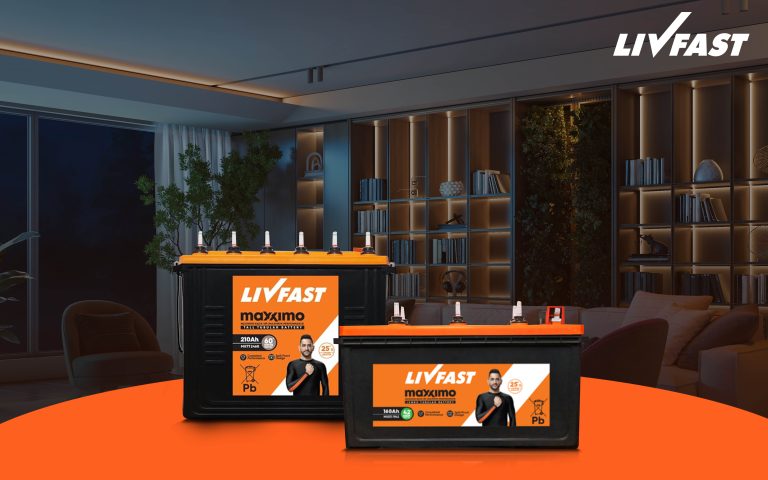
Home How to Decide the Right Inverter Battery Capacity for Home? by Powercutting is not as grave a problem today as it was a century ago or perhaps half a century ago. With the advent of a comfortable lifestyle, power supply remains uninterrupted most of the time. However, there are still many parts of India that experience power outages every now and then. This drastically affects the productive living and work-oriented modern times. We know an inverter with the right battery remains a safe bet against all disruption of your routine, electronics damage, etc., offering true peace of mind. However, investing in just ‘any’ is not what you can call a job done for continuous electricity usage. Choosing the right inverter battery capacity that aligns with the power needs of your home is essential. With the wrong inverter battery size for home, you can either end up overspending or buy the one that you cannot fully utilise. Or worse, you get stuck with insufficient backup when you need it the most. This guide breaks down how to calculate inverter battery Ah and choose the right one for your home. Keep reading. What is Inverter Battery Capacity? An inverter’s battery is measured by Ah, which means Ampere-Hour. It tells you how much current a battery can supply over a specific period of time. If you are confused about how to calculate inverter battery Ah, consider this quick example: A 150 Ah battery can ideally provide 150 amps for 1 hour or 15 amps for 10 hours. The higher the Ah rating of a battery, the longer it can supply power to appliances in the home. However, it is important to note that the inverter battery capacity can be only half the story. Other factors like your battery type (tabular, flat plate, gel), power consumption, backup duration, etc., can influence which option suits your home best! Choosing the Right Inverter Battery Capacity for your Space Here is a step-by-step guide to making a smart investment in your inverter battery size for home: Step 1: Calculate your Total Power Requirement The first step is to list the appliances you want to run during a power cut. For example: Appliance Quantity Power (W) per unit Total Power (W) Tube lights 4 40 160 Ceiling fans 3 75 225 LED TV 1 120 120 Wi-Fi router 1 20 20 Total — — 525 Calculating the wattages of different appliances will help estimate the total load on the inverter and its capacity to withstand it. Just remember, the more appliances you add, the higher the load will be. Therefore, you will require a larger battery. Step 2: Decide Backup Duration Some households only need power for a few hours, while others face longer outages. Let’s say you want 4 hours of backup for the 525W load calculated above. Backup requirement = Load × Hours of backup 525W × 4 hours = 2100 Watt-hours (or 2.1 kWh) This gives a clear idea of how much energy storage your inverter battery should ideally provide. Step 3: Convert Watt-hours into Battery Capacity Battery capacity = (Power requirement in Wh) ÷ (Battery voltage × Efficiency) Most inverter batteries operate at 12V, and accounting for 80% efficiency (since some energy is lost in conversion): Capacity = 2100 ÷ (12 × 0.8) = 218Ah So, for this example, you’d need a 220Ah battery to meet your requirement. Other Factors that Influence your Battery Capacity Choice Apart from apt calculations, real-life conditions also play a great role. Here are some important considerations: 1. Frequency and Duration For short but frequent cuts: A medium-capacity battery (120Ah–150Ah) is the safe choice. For Long outages: Go for a higher capacity (180Ah–220Ah) for reliable backup. 2. Appliance Type Some devices, like refrigerators, pumps, or desktops, draw higher startup currents. If you plan to power such loads, go for an extra inverter battery capacity. 3. Climate Conditions High temperatures can affect battery life. Tubular batteries are more durable in hot regions, while gel batteries offer stable performance in varied conditions. Popular Inverter Batteries The best inverter batteries for home can be broadly categorised into three types, helping you decide the right one. On Livfast, you can explore all popular and high-performing inverter batteries available in the market. It includes: 1. Tubular: This inverter battery is made from advanced lead-acid that offers great durability and efficiency. A versatile choice, as you can find them in a variety of options like Tall Tubular, Short Tubular, and Short Tubular Jumbo, which can meet your diverse power needs. 2. Flat Plate: One of the most common and traditionally used items in the majority of Indian homes. Lead-acid batteries are called Flat Plate and are ideal for places that experience frequent power shortages. These are affordable and low-maintenance. 3. Lithium: One of the most advanced inverter battery solutions for modern homes. A lithium inverter battery has a compact design, charges faster, lasts longer, is maintenance-free, and takes up less space. Tips to Maintain Your Inverter Battery Capacity Avoid overloading. Operating more appliances than the load you calculated can reduce the battery’s lifespan. Maintain water levels (for lead-acid batteries). Consider using only distilled water and top up at recommended intervals. Keep batteries ventilated and ensure the space has proper airflow. This will prevent overheating and avoid battery damage. Conclusion Investing in the best inverter battery capacity shouldn’t be decided on mere guesswork. You need to keep a series of things in mind, from calculating the Ah to choosing the right inverter battery size for home. Still find it challenging to find the right fit for your space? With Livfast, you can connect with our expert and take professional guidance on how to choose the right inverter battery capacity based on your power needs. Additionally, you can apply the Dealer Locator feature and find the best match for nearby dealers and the closest outlets in your area. The right choice means reliable, efficient, and long-lasting power assurance! Related Blogs Inverter Load Calculation GuideInverter

Common Mistakes to Avoid When Using Home Inverters
Home Common Mistakes to Avoid When Using Home Inverters by Nothing is more frustrating than an uncharged device, the water running hot even in the refrigerator, and your room radiating heat from all sides. That’s the struggle you go through when electricity goes out for a long time. Power cuts may not be an everyday problem in every city. However, when they strike uninvited, it is always an inverter that keeps things running smooth. From powering fans to important appliances working, it comes as a saviour for a number of electricity issues. In spite of being an important household gadget, many people do not know how to use inverter properly and end up decreasing its lifespan, all due to minor oversight. From installation to maintenance, it requires mindful usage to make them perform at their best. Livfast home inverters come packed with some smart features, with 25% faster charging and longer backup, made from active carbon technology. Keep reading to know common home inverter mistakes you should avoid to attain maximum benefits. Inverter Maintenance Mistakes You Must Avoid Here is a breakdown of the most common blunders to prevent and best inverter usage tips to enhance your device’s durability and performance: 1. Overloading the Inverter: There is one home inverter mistake that is frequent among every homeowner. They connect too many appliances at once to the inverter, which can result in going beyond its rated power capacity. Every inverter has a specific capacity in watts, and exceeding this limit not only strains the system but also damages both the inverter and the devices connected to it. It affects the protection system of the inverter, overheating it and ultimately destroying it. For example, if you are running high-power appliances like a refrigerator and a microwave simultaneously with 1200W on a 1000W inverter, then that is the recipe for failure. It will lead to an immediate shutdown. What should you do instead: Always check the rated capacity of your inverter first before using it. Calculate both the startup and running usage of your devices. Invest in an inverter that has at least 20-30% higher wattage than the maximum load you expect. Utilise a power calculator to identify the total load requirement. Create a simple checklist for backup usage to prevent overloading and keep your system functioning smoothly. 2. Ignoring Battery Health: The battery is the heart of any inverter. Yet many homeowners overlook inverter battery maintenance. Being the main power source, if a battery remains undercharged or a mismatch in installation, then the requirement of the inverter will affect the entire performance of the system. It can lead to reduced efficiency, shorter backup time, frequent power failures, and even premature replacement. Livfast inverter batteries are designed with Short Tabular, Tall Tabular, and Flat Plate technologies that boast high power while offering consistent and long-lasting performance. What home inverter mistakes people usually make when it comes to its battery: Not checking electrolyte/water levels regularly causes the plate to dry up, reducing the battery’s backup capacity. Letting corrosion due to dirt and acid fumes build up on terminals. Not cleaning them may restrict the flow of the current, dropping the voltage, and even cause sudden failures. Not recharging early after it has been deeply discharged. This causes sulfation, which shortens its lifespan and efficiency over time.Tips for effective inverter battery care: Test the battery voltage and capacity regularly. Only use batteries that equal the input voltage of your inverters (12V, 24V, and so on). Do not mix new and old batteries. 3. Wrong Installation and Wiring: People often end up wiring their inverters improperly, which hampers their performance and safety. It is one of the most repeated home inverter mistakes when you use the wrong wire thickness, incorrect safety parts, and tight connections. The wrong installation and wiring can result in problems, including: The power drops, making the inverter function less effectively. The wires used can get too hot and risk fire. Increased chances of short circuits. How can you avoid these common inverter problems of installation: Before taking any step, check the manufacturer’s guidelines to choose the right cable size based on the capacity of the inverter and its distance from the battery. Do not forget to use circuit breakers or inline fuses near the battery. Lastly, make sure every connection is clean, tight, and free of corrosion. 4. Improper Ventilation due to Location: Most often, the inverters are cramped in poorly ventilated spaces or damp areas like storage rooms or spots under the staircase. The inverters generate a high amount of heat when in operation, and placing them in compact places with lower airflow can shorten their lifespan. It can risk its internal components and thermal shutdowns altogether. At the same time, keeping them in damp spaces can increase the chances of damage due to moisture and corrosion. Right heat management is another home inverter mistake that people overlook. How can you detect overheating: When your inverter shuts down unexpectedly. When the fan begins to run fast and continuously. The inverter has a hot surface, or when you see warning lights. Inverter safety tips to prevent heating: Always install your home inverters in a dry, cool, and well-ventilated space. Keep a clearance of at least 4-6 inches on all sides. Never install them near any flammable material. Conclusion A home inverter ensures your life remains uninterrupted and you don’t get any surprises during emergencies due to power cuts. They are not a ‘fit and forget’ device. With the best inverter safety tips listed above, you can not only achieve good performance but also save money in the long run. With Livfast home inverters, you can give your home the peace it needs. Available in a variety of options for different capacities and uses, these can charge well even at voltages as low as 90V. Designed with highly advanced Pure Sine Wave technology, it helps keep your appliances running noiselessly. Apply the expert assistant feature on the portal and get

Step-by-Step Guide to Replacing Your Scooter Battery Yourself
Home Step-by-Step Guide to Replacing Your Scooter Battery Yourself by There’s nothing more frustrating than gearing up for a ride only to find your scooter refusing to start. Most of the time, the culprit is a tired battery. The good news? Scooter battery replacement is not as intimidating as it seems. With a little patience and the right approach, you can do it at home yourself. Let’s make it easier for you. Why Replace Your Scooter Battery? The scooter battery is not forever. Usually, they serve you well for two to three years, but factors such as small rides, weather and poor maintenance can shorten their lives. A weak battery appears in many ways: the headlamp looks slow, the horn sounds weak from normal, or struggles to crank the starter motor. Sometimes you will hear a one-click noise instead of the ignition of a confidence. If you have noticed these signs, or your battery is old, this is the time for scooter battery replacement. Regular scooter battery check-ups with a simple multimeter can also tell you the story. A healthy 12V battery should read above 12.6V. Anything around 12.0V or lower usually means the battery is on its last leg. Tools You’ll Need Before diving in, gather a few basics: A screwdriver and a small spanner or socket set Gloves for safety A dry cloth and a little petroleum jelly A brush for cleaning corrosionThat’s it. No complicated equipment. Your owner’s manual will help you confirm the exact battery type and its location. Then you can start with the scooter battery replacement. Step-by-Step Guide to DIY Scooter Battery Replacement Most scooters hide the battery under the seat, near the footboard, or behind the front panel. Once you’ve found it, here’s what to do: 1. Switch Off and Access the Battery Turn off the ignition and remove the key. Open the compartment and note how the wires are connected. Consider clicking a photo of the setup so it can help you during reconnecting. 2. Disconnect Safely Always remove the negative (black) terminal first. This reduces the risk of short circuits. Then detach the positive (red) terminal. 3. Remove the Old Battery Undo the strap or bracket holding it in place and lift it out carefully. Keep it upright to avoid any leaks. 4. Clean the Area Use a brush to clean the rust from trays and terminals. If necessary, wipe with a cloth in a small baking soda solution and dry well. 5. Install the New Battery Place the replacement in the same orientation as the old one. If it’s a sealed VRLA battery, there’s no need to top up fluids; it’s ready to go. 6. Reconnect the Terminals This time, start with the positive (red) terminal and then attach the negative (black). Snug the bolts but don’t over-tighten. A dab of petroleum jelly keeps corrosion at bay. 7. Test and Secure Turn the ignition on. If your lights, horn, and starter respond strongly, you’ve done it right. Refit the cover and strap everything down securely. That’s your DIY scooter battery replacement done and dusted. Electric Scooter Battery Installation E-scooters are a little different. Many models have removable packs: Power off the scooter. Unlock and unplug the battery gently. Slot the new or charged pack in and reconnect. Secure it, then charge fully before use.If your scooter has a fixed, high-capacity pack sealed inside the frame, don’t attempt to replace it yourself. That’s a job for a service centre because it involves delicate wiring and safety systems. Tips for a Smooth Scooter Battery Replacement Check the fuse: If the scooter doesn’t start, a blown fuse may be the issue. Avoid sparks: Never touch a tool across both terminals. Dispose responsibly: Old batteries are recyclable. Hand them over to the dealer instead of tossing them in the bin. Why Livfast Batteries Make It Easier? Doing a scooter battery replacement yourself becomes a lot simpler when you have the right battery. Livfast 2-wheeler batteries are designed with everyday riders in mind. They provide continuous performance, so your scooter runs easily on the city’s commute and weekend work. A quick start feature immediately starts your engine with fire, avoiding the embarrassment of push-starting in traffic. Durability also matters, which is why the Livfast battery is made for a long life, giving you more rides between replacements. The seal VRLA design adds a layer of safety and stability, while the zero maintenance feature means no topping, no dirty leaks – just fit it and forget it. With Livfast, scooter battery installation feels less like a chore and more like an upgrade. Wrapping Up A scooter battery replacement doesn’t require a workshop visit every time. With a little care, you can do it yourself, save time and money. Begin with a scooter battery check-up, follow the steps to safely remove and refit, and your scooter will return to its best form. When it is time for a new unit, choose Livfast. With rapid start, reliable performance and long-lasting life, these batteries are designed to make every ride comfortable. Give strength to your ride with Livfast and enjoy worry-free journeys, mile after mile. Related Blogs Best Bike Battery SelectionTwo-Wheeler Battery Life TipsTypes of Automotive BatteriesFixing a Dead Car Battery FAQ’s General How do I know it is time to replace the scooter battery? If your scooter struggles to start, the horn sounds weak, or even after charging the headlight looks dim, it is likely that your battery is near the end of its life. Is this Helpful? Can I replace the battery myself? Yes, all you need is a screwdriver, a spanner, and some patience. Consider taking a picture of the wiring and then start with the process. However, we recommend taking expert guidance while following the battery replacement steps to avoid unnecessary damage to your vehicle. Is this Helpful? How long does a scooter battery usually last? The batteries generally last for two to three years. Some last longer if you ride often and look
Understanding Solar Grid-Interactive Systems for Homes
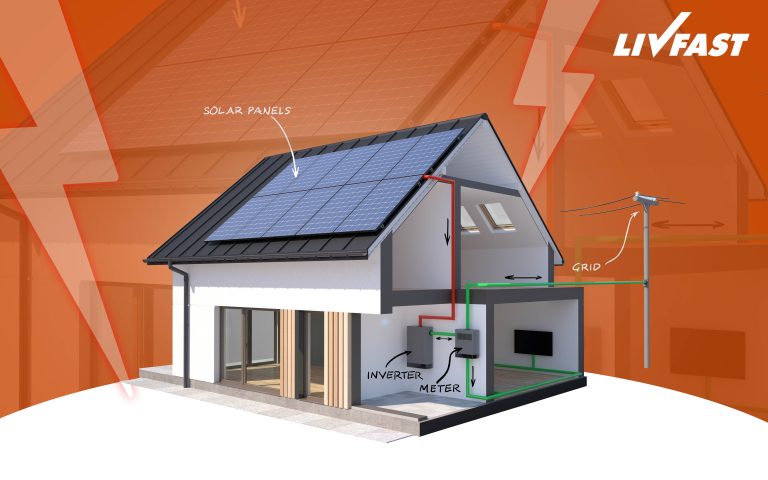
Home Understanding Solar Grid-Interactive Systems for Homes by Most of us have experienced power cuts when cooking dinner or when having an important online meeting. This is a reminder that we are all dependent upon steady electricity. Many homeowners are turning toward solar, and people are looking toward solar grid interactive systems rather than just installing panels. These are smart energy solutions designed to give you flexibility, backup, and savings. Let us understand more about them in this article. What Makes a Solar Grid Interactive System Different? Picture it like this: in the daytime, your solar panels soak up sunlight and generate electricity. That power runs your appliances first. If there’s extra, it doesn’t go to waste. Depending on your setup, it either charges a solar battery backup or flows into the utility grid. At night, or on a rainy afternoon when the power drops, your home doesn’t suddenly go dark. Instead, it pulls from the battery or the grid. This flexibility of the grid tied solar distinguishes a grid-interactive system from a basic grid-tied solar setup. Grid-tied (without battery): No storage, just exports excess to the grid. Shuts down if the grid goes out. Grid-interactive (hybrid): Works with both the grid and batteries. Can supply backup power even if the grid fails.Your home can change simply among solar, storage, also among the grid. This hybrid inverter system will make the switch smooth without you noticing it at all. Why is Solar Grid Interactive System Popular With Homeowners? Ask any family why they like the idea of solar, and the answers are usually the same: fewer electricity bills, backup during outages, and the comfort of knowing you’re using clean energy. A solar grid interactive system ticks all three boxes. You remain connected to the grid, so there is no risk of running out of power. With the net metering system, you can even send extra power back to the grid and receive credit. This reduces the portion of your utility bill you pay each month. With storage, you can keep essentials, say, fans, lights or your Wi-Fi, running even when the power is out.For most households, the balance of security, efficiency, and savings becomes the biggest benefit of grid interactive solar systems. ROI & Cost Savings with a Solar Grid Interactive System One of the biggest questions about solar is – will it really save me money? The answer is yes, and the savings grow rapidly. Let’s take a simple example. Suppose a family set up a 3 kW solar grid interactive system for about ₹1,00,000. With net metering, their monthly electricity bill decreases by ₹ 1,500- ₹ 2,000. It is a savings of ₹ 18,000- ₹ 24,000 every year. At this rate, the system pays for itself in 4 to 5 years. After that, the electricity generation is free. Since a solar system lasts for 20–25 years, the family enjoys more than a decade of savings. Therefore, while the upfront cost may be higher, long-term returns on investment are excellent. Not only are you saving money, but you are also saving from rising electricity prices for the coming years. How Grid-Interactive Solar Systems Work in Everyday Life? Think about a typical day. The morning sun hits your rooftop panels and starts powering your home. You use what you need, while the rest is either stored or exported. As evening rolls in, instead of paying peak-hour electricity rates, you’re covered by the energy you stored earlier. If there’s ever a dip in generation, say during the monsoon, you can draw from the grid. And if you’re in a region that doesn’t allow exporting excess power, a zero export system makes sure all your solar stays in-house. It’s a seamless handoff between different sources, which is why it feels almost invincible once installed. Where Does Livfast Make the Difference? Now here’s the interesting part; having a system is one thing, but having one that’s designed for Indian conditions is another. That’s where Livfast comes in. Their solar grid-interactive inverters bring a layer of intelligence and durability that homeowners genuinely appreciate. Advanced I-V Scanning for Seamless Integration Take the voltage problem, for example. We all know how unpredictable Indian grids can be. Livfast inverters come with in-built I-V scanning, which allows them to handle a wide range of voltage (165–280 VAC). That means sudden spikes or drops don’t throw your system off balance. Best-in-Class MPPT Voltage Range Then there’s the MPPT voltage range. Put simply, it helps your system deliver consistent power even when the weather isn’t perfect. Livfast inverters can even manage overloads up to 150% for 30 seconds and 110% for three minutes, so your lights don’t flicker just because you switched on a heavy appliance. Real-Time Monitoring, Always in Control And because today’s homes are smarter, Livfast keeps you in the loop with real-time monitoring. You can check your system’s performance anytime, track savings, and even see how your batteries are doing. Speaking of batteries, the inverters support multiple types like Flooded, Gel, Sealed, and Li-ion; so you’re never tied to one option. Highest Rated PV Input Power Another small but meaningful feature? Minimal self-consumption at night. Livfast inverters are built to use as little energy as possible when the sun’s down, which means more of your solar power is saved for you. Combined with the highest-rated PV input power, it translates to better efficiency and more usable energy over the long run. Wrapping Up Going solar doesn’t have to mean choosing between independence and reliability. With a solar grid interactive system, you get the best of both. Add in a hybrid inverter system, solar battery backup, and smart touches like a zero export system where needed, and your home is ready for whatever the day or night brings. With Livfast, that promise goes a step further. From advanced I-V scanning to real-time monitoring and best-in-class efficiency, their inverters are built to keep Indian homes running without a hitch. So even when the sun sets, your energy doesn’t.
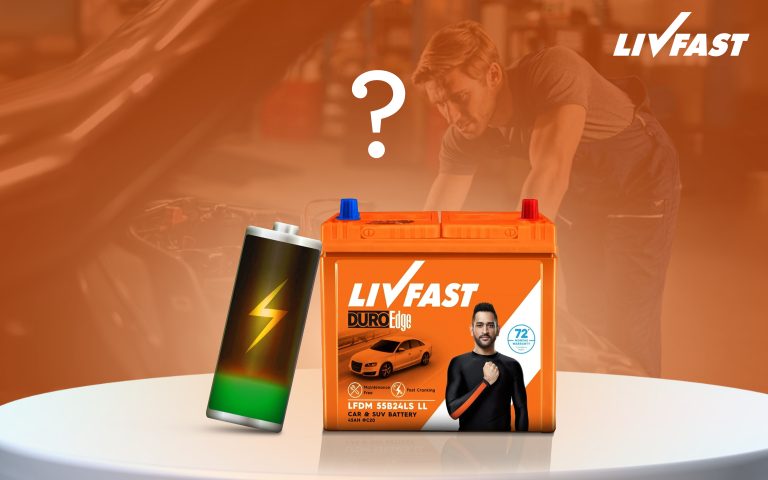
What to Do When Your Car Won’t Start Due to a Dead Battery
Home What to Do When Your Car Won’t Start Due to a Dead Battery by Suppose you are running late for your work and your car won’t start. Suppose you are going on a road trip and your car breaks down. Suppose you are just out on a drive, stopped somewhere to get a cup of tea, and when you come back to the car, your car decides that it’s the perfect time to stop working! See? However, the situation, wherever you are, nobody likes it when the car doesn’t start. The reasons could be many – dead battery (and you might wonder how to start a car with a dead battery in such moments), faulty ignition switch, non-responsive key fob, faulty starter motor, blown fuse, clogged fuel filter, and so on! The million-dollar question is, what do you do when your car won’t start? That’s exactly what we are about to discuss. Join in with your car! Check the Battery! Most of the time, the reason for a car not starting is a dead car battery. Take a look at the battery symbol. If it is weak, you know the battery isn’t doing so fine. If the headlights or horn are not working, it’s a battery issue. Now, let’s talk about the obvious dead car battery symptoms. Twist the key, and if there is no light on the dashboard or no engine sound whatsoever, know that the battery needs attention. A jumpstart can help; so, grab a portable battery charger. It is also a good idea to read the manufacturer’s manual, as some cars may be jump-started using another vehicle. There’s a solution to car battery low, but if it doesn’t start after charging, you may need to get it replaced. Wait, if the car doesn’t start but the battery symbol shows properly, there could be some other issues that you should check for before thinking about a battery replacement. Examine the Battery Connections It may not be the discharged battery, but the faulty connections prevent the engine from receiving the power it requires to run. The chances of this are low, but it doesn’t hurt to check. Try lightly turning or twisting the cable connections going to the battery. If the cables move, the connection is loose. Debris or some sort of building might be the reason. Remove the connectors and use a piece of cloth to clean them thoroughly. Connect them back to the battery nodes. Clamp the connectors tightly with a wrench. Now, try starting the car. Check the Alternator Does your car start but stall immediately? Do the interior lights turn on but dim out quickly? It could be the alternator. Another sign is a burning smell; the alternator wraps around the engine, and if it doesn’t work well, you will get a hot rubber smell. If you think that the issue is with the alternator, call a tow truck and take it to the professionals. Try a Push Start (for Manual Cars) If you’re driving a manual transmission vehicle, you can try a push-start method as a temporary solution when the battery is dead – especially useful when you’re figuring out how to start a car with a dead battery without tools. Keep Your Car Running with Livfast Batteries! Livfast offers a wide range of automotive batteries designed for high performance, long-lasting power, and maximum safety. Pick from the DuroEdge, DuroElite, Duro Elite Hybrid, DuroMax, DuroLife, DuroTaxi Ultima, or DuroTaxi series and receive the best in call warranty with your purchase. Our batteries are built with a corrosion-resistant alloy to ensure high performance even in weather conditions. Wrapping Up! Discharged or drained batteries are often the reason preventing the car from starting. If the car doesn’t stop, identify the problem and get it fixed right away. In case any replacement is needed, for instance, if you need to replace the battery, get the best quality solution for long-lasting performance. Related Blogs Best Car or SUV BatteryCar Battery Life TipsCar Battery Replacement SignsTypes of Automotive Batteries FAQ’s General How to know if there’s any ignition switch issue? If the engine does not crank when turning the key, it could be an issue with the ignition switch. Is this Helpful? Can there be a key fob issue? If the car doesn’t detect a key or doesn’t start even on pressing the start button, the key fob might be faulty. Is this Helpful? How to detect if the fuel filter is clogged? If you see the engine cranking, but it doesn’t fire, the battery and the rest of the electrical system might be fine, and the problem might be with the fuel filters. Is this Helpful? How long does a car battery last? A car battery typically lasts three to five years. However, this can vary based on factors like climate, driving habits, and battery quality. Is this Helpful? How to know if there’s any ignition switch issue? If the engine does not crank when turning the key, it could be an issue with the ignition switch. Is this Helpful? Can there be a key fob issue? If the car doesn’t detect a key or doesn’t start even on pressing the start button, the key fob might be faulty. Is this Helpful? How to detect if the fuel filter is clogged? If you see the engine cranking, but it doesn’t fire, the battery and the rest of the electrical system might be fine, and the problem might be with the fuel filters. Is this Helpful? How long does a car battery last? A car battery typically lasts three to five years. However, this can vary based on factors like climate, driving habits, and battery quality. Is this Helpful? If the engine does not crank when turning the key, it could be an issue with the ignition switch. Is this Helpful? If the car doesn’t detect a key or doesn’t start even on pressing the start button, the key fob might be faulty. Is this Helpful?

Solar Management Unit: Enhancing Solar System Efficiency
Home Solar Management Unit: Enhancing Solar System Efficiency by The world is shifting more and more towards renewable energy. With that, solar power is becoming a reliable, sustainable option. To maximise and ensure the best use of solar energy, efficient energy management is crucial. This is where a solar management unit (SMU) enters our discussion. Consider the solar management unit the brain of your solar system. It is what ensures the energy is collected, distributed, and stored optimally and intelligently. This tool plays an important role in bringing and enhancing efficiency in your solar energy management. And that’s exactly what we are going to explore here! What is a Solar Management Unit? A solar management unit is among the smart solar solutions that maximise the performance of your solar power system. Many homeowners new to solar often ask: what is solar management unit or what is a solar SMU? Here’s how to best describe a solar management unit working: it controls the flow of electricity from solar panels to batteries and from batteries to the load (aka your appliances). By optimising the usage of solar energy over power from the grid, it helps improve solar system efficiency and saves costs. While it enhances performance, it also guards your system against typical hazards such as overcharging, short circuit, and reverse current. How SMU Enhances Solar System Efficiency: The Advanced Features If you are wondering how solar management unit works, here’s a breakdown. These features explain how an SMU enhances your setup: Prioritising Solar Power Use A solar SMU makes sure that power from solar panels is used first. Grid power is utilised only when solar power is low. This maximises solar usage and minimises the use of costly grid electricity. Smooth System Monitoring with LCD Screen With an integrated LCD display, an SMU can give instant views on energy production, battery levels, and system health. Simple solar system monitoring lets users optimise performance and continuously improve solar system efficiency. Optimised Energy Savings By optimising solar power delivery to appliances and batteries, the SMU avoids wastage of energy. This results in better cost savings and improved returns on solar investments. Smart Safety Mechanisms The SMU shields the system from the most common electrical hazards like short circuits, reverse current, and improper polarity. These protection mechanisms enhance system reliability and prolong the life of solar components. Extended Battery and Inverter Life By controlling charge cycles and eliminating overloads, the SMU lessens stress on both inverters and batteries. This increases the efficiency and longevity of the entire solar system. Solar Management Unit Advantages: Why You Should Invest in One There are several solar management unit advantages that make it a must-have for modern solar setups. Including an SMU, one of the best solar efficiency tools, in your solar system means achieving convenience, performance, savings, and security. The solar management unit advantages include: Improved Solar Performance: Maximises energy consumption and minimises grid reliance. Savings in Cost: By maximising solar power, you significantly save on electricity bills. Life of Components: Safeguards and prolongs the life of your solar battery and inverter. Easy-to-Use Monitoring: Stay up-to-date with the system’s performance through smart displays. Adaptability: Compatible with new solar configurations as well as installed systems. The Role of SMUs in Smart Solar Solutions As adoption of solar increases, so does demand for intelligent solar solutions. An SMU embodies this change. It optimises your solar investment for peak performance. From small homes to farms and businesses, an SMU helps you maximise returns from your solar panels and keep your setup safe. Enhance Your Solar Efficiency with Livfast Solar Management Units Livfast brings solar management units with advanced features for optimal energy control. From the in-built intelligence to maximise the use of solar energy, to LCD display for real-time monitoring, to smart batteries, our solar management units are built for high performance. Set up your solar system for maximum efficiency and find the best solar management unit price with Livfast! Wrapping Up! A solar management unit is an essential component of contemporary solar systems, ensuring both energy efficiency and secure system operation. Through smooth monitoring, intelligent battery charging, and embedded protection, it allows you to fully utilise solar energy. You might be just exploring solar energy or trying to find ways to enhance your solar system; in any case, an SMU will be a beneficial investment. Related Blogs Benefits of Solar Charge ControllersSolar Grid-Interactive SystemsSolar Inverter Installation Benefits FAQ’s General Can I use a solar management unit (SMU) with my current solar system? Yes. Solar Management Units (SMUs) are mostly made to connect easily with new and existing solar installations, so they are a versatile choice for enhancing solar energy management. Is this Helpful? Do solar management units (SMUs) need to be maintained regularly? No regular maintenance is required. It is advisable to check the connections from time to time, dust the unit, and provide good ventilation for better performance. Is this Helpful? How is a solar management unit (SMU) different from a solar charge controller? While a solar charge controller regulates the power generated by solar panels into the system batteries, an SMU optimises overall solar energy usage. Is this Helpful? Can I use a solar management unit (SMU) with my current solar system? Yes. Solar Management Units (SMUs) are mostly made to connect easily with new and existing solar installations, so they are a versatile choice for enhancing solar energy management. Is this Helpful? Do solar management units (SMUs) need to be maintained regularly? No regular maintenance is required. It is advisable to check the connections from time to time, dust the unit, and provide good ventilation for better performance. Is this Helpful? How is a solar management unit (SMU) different from a solar charge controller? While a solar charge controller regulates the power generated by solar panels into the system batteries, an SMU optimises overall solar energy usage. Is this Helpful? Yes. Solar Management Units (SMUs) are mostly made to connect easily with new and existing
How to Choose a High-Efficiency Solar Inverter for Home Use
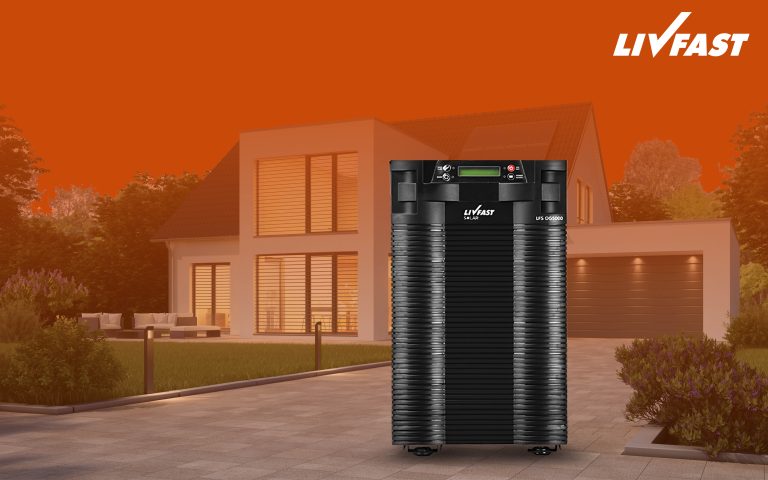
Home How to Choose a High-Efficiency Solar Inverter for Home Use by The sun’s extreme light and heat may get frustrating sometimes, but it is this energy that can brighten your homes and offices. Ever thought about how the energy of the sun can be converted into usable electricity to charge your phone or maybe play video games with interruptions? It is possible with high-efficiency solar inverters. While your home solar panels might be champions at harvesting clean energy, the right inverter can be a smart home decision. With so many inverter types, features, and brands available, how do you choose the best solar inverter for home? The key is to pick the one with high solar inverter efficiency that can not only lower your electricity bills but also reduce your carbon footprint. Explore Livfast high-performance solar inverters designed with cutting-edge technologies and safety features. This guide reveals what a solar inverter looks like and how to buy the right one. What is a Solar Inverter? Also known as a solar panel inverter, it is a device that transforms direct current (DC) into alternating current (AC). This energy is utilised by your home through the electric grid that powers all the appliances. Without a solar inverter, your solar panel will not use the high amount of energy used by it—it’s like a car without an engine. Points to Remember While Selecting A Solar Inverter These are the things to look for when you are choosing a solar inverter for your home or even office – especially if you’re unsure how to choose solar inverter for your system. 1. Know Different Inverter Types It is important to know what the available inverters are to understand what will best meet your needs. Here are the different types to consider: String Inverters: These are one of the most common types of solar power setups. All the panels are arranged in series connected to one string; that’s why the name — string inverter. This connection converts the DC power from the panel into AC power. They are cost-effective and simple to integrate. Micro Inverters: You can also find solar inverters in the form of micro inverters. These are attached to separate solar panels, where every panel independently converts DC to AC power. A micro inverter boosts energy efficiency, particularly when individual panels are under varying sunlight conditions. This makes it easier to track the performance of the panel. Hybrid Inverters: These not only convert DC to AC but also integrate with battery storage systems. They can store surplus solar energy generated during peak sunlight hours, providing a reliable backup power source when you need it. 2. Solar Inverter Efficiency and Overload Capability: Don’t Settle for Less Solar inverter efficiency is the percentage of DC power from solar panels that a solar inverter successfully converts into usable AC power. A high efficiency inverter means more of your solar energy gets used or sold, not wasted. State-of-the-art residential inverters hit around 98% efficiency. Thus, only a small percentage of the energy is lost as heat during the conversion process. Livfast inverters take this further with: Low nighttime self-consumption – ensuring your battery isn’t drained when the system is idle. Strong overload handling – up to 150% for 30 seconds and 110% for 3 minutes. This allows them to manage fluctuating loads smoothly, such as the heavy startup demand of air conditioners, without interruptions. 3. MPPT—Match Panel Power Smartly MPPT (Maximum Power Point Tracking) is your sun-harvesting optimiser. Livfast grid inverters feature a wide MPPT voltage range, ensuring you extract maximum energy even in less-than-perfect conditions. A wider MPPT range provides greater flexibility, making it especially useful when your solar panels experience shading or varying weather conditions. 4. Safety, Monitoring and Battery Compatibility Your solar system should be safe, smart, and transparent: Livfast inverters offer real-time monitoring, letting you track performance and detect outages instantly They handle multiple battery types like flooded, gel, sealed, or Li-ion, making future upgrades smoother Built-in protections guard against overvoltage, high currents, and more. Many models also include Wi-Fi connectivity for easy control 5. Warranty and Support: Invest with Confidence Having a solid warranty matters, especially with a tech-heavy item like an inverter. At Livfast, we bring you: 8 years on-site warranty on inverter components 10 years for grid-tie combo systems That level of support ensures long-term reliability with professional coverage. 6. Size It Right: Capacity and Future Expansion Choosing an inverter isn’t guesswork: Match inverter capacity (e.g., 3 kW, 5 kW) to your solar panel array and your household’s energy use. Livfast’s one-phase models (3 kW, 5 kW) suit many homes. For future expansion or larger setups, their 3-phase options (10 kW, 20 kW, 30 kW) offer growth and robust handling Conclusion Enjoy the quiet and efficient energy in your home that does not burden your electricity bills. With the Livfast range, finding high-efficiency solar inverters would feel empowering, not frustrating. If you want power-packed advanced features, easy monitoring, and a user-friendly LCD display, we check all boxes. Our solar inverters are built to adapt and grow with your energy needs. Ready to match the perfect Livfast inverter to your home? Let us help you find it right. Related Blogs Solar Inverter Installation BenefitsSine Wave vs Square Wave InverterSolar Management Unit BenefitsAdvantages of Solar Panels FAQ’s General Is the solar inverter efficiency impacted by changing weather? Yes. Your inverter’s efficiency can be reduced during hot weather conditions. However, advanced models come with a robust cooling mechanism with heat sinks and fans that can offer optimum performance even in extreme heat. Is this Helpful? Can I find solar inverters that have a fast charging time? Absolutely. Livefast models are one of them. With our 50 A solar charge controllers, you do not have to wait hours to charge your inverter. The battery is topped up quickly while the solar system remains efficient throughout. Is this Helpful? How can I maximise the solar energy of my inverter? Choose smart inverters with built-in technology that controls energy consumption. Livfast inverters are designed with Real Time Clock