


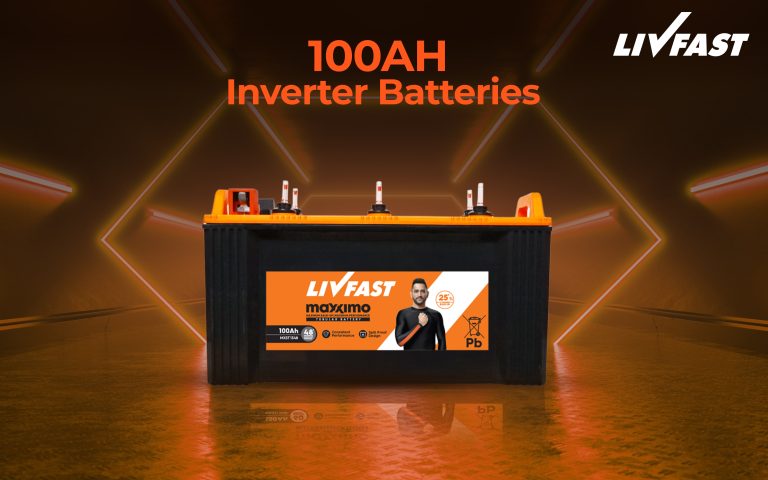
A Complete Guide To 100Ah Inverter Batteries
Home A Complete Guide To 100Ah Inverter Batteries by What is the power backup meant to do? Make life easier, right? But the wrong battery choice can do the opposite! The 12 V 100 Ah inverter battery is often chosen because it seems safe and familiar. It works with most inverters and suits typical household needs. Like any other battery, the performance of a 100 Ah battery depends on usage and maintenance. The backup duration, charging practices, and depth of discharge have a significant impact. This guide aims to explain the suitability, output expectations, and best practices of a 100 Ah battery. What Does a 12V 100Ah Battery Actually Mean Battery labels can look simple, but they carry technical meaning. An understanding of the 100 Ah battery meaning can help avoid wrong assumptions. A 12V 100Ah battery rating has two parts. Voltage and battery capacity: 12V refers to the operating voltage 100Ah refers to the total charge storage capacity In theory, the battery can deliver 100 amps for one hour, or it can deliver a lower current for a longer duration. In real life, batteries don’t work with the exact formulas. Losses can occur due to inverter efficiency, wiring, and heat. This is why backup time always feels lower than expected. Knowing this helps you plan realistic power usage. Core Technical Specifications You Should Know Every battery works safely within defined limits. Operating beyond these limits reduces lifespan. A quality 12V 100Ah battery usually follows standard specifications: Specification Typical Range Nominal Voltage 12 Volts Rated Capacity 100 Ah Energy Storage 1200 Wh Bulk Charging Voltage 14.2V to 14.6V Float Voltage 13.5V to 13.8V Cut Off Voltage 10.5V to 11.0V Charging Current 10A to 20A Operating Temperature 5°C to 45°C These numbers matter because they guide inverter settings. Incorrect voltage or current damages battery plates over time. Understanding Usable Energy and Real Output Many users assume the full units stored can be used. This is not safe for lead-acid batteries. Using the full 100 Ah battery capacity can stress the battery and shorten service life significantly. Why is usable energy lower: Inverter efficiency loss of around 10 to 15 per cent Heat loss during discharge Safe depth of discharge limits In practice, usable energy stays around 900 to 1000 Wh. That equals roughly one unit of electricity. This understanding prevents disappointment during outages. Backup Time in Real Home Conditions Backup time changes with load. Higher load drains the battery faster. A 100Ah battery is designed for light to moderate usage. Load Type Backup Estimate Lights and fans 7 to 9 hours Medium home load 3 to 5 hours High load usage 1 to 2 hours Running heavy appliances continuously is not advised. This battery performs best with controlled power usage. Types of 100Ah Batteries and Their Differences Battery type affects lifespan and maintenance. If you choose the wrong type, you will have issues and need early replacement. Common battery options: Tubular lead-acid batteries SMF batteries Lithium batteries Tubular batteries are preferred for inverters and solar systems. They handle repeated discharge cycles better. SMF batteries suit UPS systems where discharge is limited. Lithium batteries offer high efficiency but at a higher cost. Selecting the right type depends on usage frequency. Charging Behaviour and Best Practices Charging quality defines battery health. Wrong charging is a major cause of failure. Using a weak inverter for charging causes sulphation, and using a powerful charger without limits causes overheating. Maintaining a balance is essential here as well. Here are a few important charging guidelines: Charging current should stay between 10A and 15A Avoid overcharging and undercharging Allow complete recharge whenever possible Match inverter settings to battery type Solar Compatibility and Daily Cycling Impact Solar systems place daily stress on batteries. Not all batteries handle this well, but a 100Ah battery works best with these solar setups (small-scale). Solar compatibility features: Ideal panel range is 300W to 600W Tubular or lithium batteries are recommended Accurate charge controller settings are essential SMF batteries wear out quickly under solar cycling. Tubular batteries manage daily use more reliably. Where a 12V 100Ah Battery Works Best Understanding suitable applications of the 100Ah battery helps avoid misuse. Ideal use cases: Homes with basic appliances Small offices Shops and clinics CCTV and network systems It is not designed for air conditioners or heaters. Using it within limits ensures steady backup and long life. Battery Life Expectancy and Care Battery life depends on how it is treated. Regular maintenance and proper ventilation extend life, whereas ignoring water levels reduces it quickly. A look at different battery types and their lifespan: Battery Type Expected Life Tubular 5 to 7 years SMF 3 to 4 years Lithium 8 to 10 years Why Livfast 100Ah Batteries Stand Out Livfast inverter batteries are designed for Indian power conditions. They focus on durability and user convenience. Livfast battery advantages: Low maintenance operation Spill-proof design Heavy-duty cranking power Reliable performance in extreme weather Strong service support network Transparent warranty coverage Not just this, we also offer a long warranty and excellent after-sales support. Our focus on quality reflects across product categories. Conclusion A 12V 100Ah inverter battery is an excellent choice for controlled and reliable power backup, but it must be used with the right expectations. Understanding 100 Ah battery load capacity, charging limits, and suitable applications makes a real difference. It helps you get consistent backup without stressing the battery. When reliable quality, support, and warranty matter, choosing a trusted brand becomes important. Livfast 100Ah batteries offer dependable performance backed by strong support, providing a practical long-term solution for everyday power needs. It is also important to know how to choose inverter for 100ah battery to ensure a reliable power supply. Find the perfect inverter and battery combo for your requirements on Livfast. FAQ’s General Is it safe to use 100 AH batteries in areas with high temperatures? Absolutely, it is safe to use 100 Ah batteries in areas with high temperatures, but proper ventilation is a must.
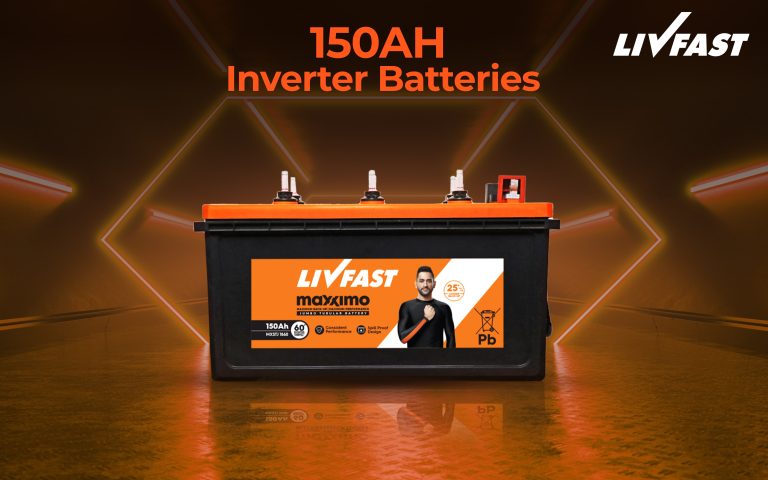
A Complete Guide To 150Ah Inverter Batteries
Home A Complete Guide To 150Ah Inverter Batteries by A stable power backup setup starts with the right battery. And for many households, that journey begins with a 150Ah option. This capacity is widely recommended for medium power needs. It handles daily usage without feeling excessive. But buying a 150Ah inverter battery is not just about numbers. Two batteries with the same rating can behave very differently. One may deliver steady backup for years. The other may struggle within months. The difference lies in design, usage, and care. Understanding these factors helps you avoid common mistakes. This guide takes a closer look at the 150Ah inverter battery, meaning and everything else about it. It explains what they are best suited for and how to choose wisely. So read till the end. 150Ah Battery Meaning The term 150Ah refers to the battery capacity. It shows how much current the battery can supply over time. A 150Ah battery can ideally deliver 150 amperes for one hour or lower current for a longer duration. In real life, backup time depends on load and system efficiency. Key things to understand: Ah means ampere hour Higher Ah means longer backup Actual performance depends on usage pattern A 150Ah inverter battery is suitable for medium power needs. It supports essential household appliances comfortably. Understanding this rating helps set realistic expectations for the battery. Ideal Applications for 150Ah Inverter Batteries 150Ah batteries are widely used because they suit many setups. They are neither too small nor excessively large. These batteries are commonly used in residential and small commercial spaces. Typical applications include: Homes with lights, fans, and a television Small offices with computers and routers Shops with basic lighting and billing systems Solar backup systems with a moderate load They provide sufficient backup without occupying too much space. This makes them a practical choice for everyday power needs. Backup Time You Can Expect from a 150Ah Battery. Backup time is one of the most important concerns for buyers. It depends on the connected load and the inverter efficiency. A 150Ah battery performs well when the load is balanced. Approximate backup reference 150 Ah load capacity Type Estimated Backup Time Lights and fans 4 to 6 hours Medium household load 3 to 4 hours Heavy load 2 to 3 hours Note: These values vary based on battery condition and usage habits. Tip: Avoid overloading to maintain a stable backup duration. Types of 150Ah Inverter Batteries Not all 150Ah batteries use the same technology. Battery type plays a major role in lifespan and performance. Choosing the right type improves reliability and reduces maintenance effort. Common types available Flat plate lead acid batteries Tubular lead-acid batteries Sealed maintenance-free batteries Tubular batteries are generally preferred for inverter use. They handle deep discharge better and last longer. Selecting the correct type ensures better value over time. Importance of Build Quality and Internal Design Battery performance is strongly linked to construction quality. Internal components decide durability and safety. Poor-quality batteries degrade faster under load. What indicates good build quality Thick positive plates Strong container material Proper venting system Corrosion-resistant alloy A well-built 150Ah battery maintains capacity for longer periods. It also performs better during extended power cuts. Maintenance Requirements of 150Ah Batteries Most 150Ah inverter batteries require periodic maintenance. Ignoring this maintenance reduces battery life. Tubular batteries usually need less frequent water topping. Maintenance aspects to consider Electrolyte level checking Use of distilled water only Clean terminals regularly Ensure proper ventilation Simple maintenance habits improve performance and safety. They also prevent sudden battery failure. Charging Compatibility with Inverters and Solar Systems A 150Ah battery must be compatible with the charging system. Both inverters and solar systems have specific charging requirements. Incorrect charging shortens battery life. Things to check: Charging voltage range Inverter capacity compatibility Solar charge controller settings Protection against overcharging Balanced charging ensures efficient energy storage. It also keeps the battery healthy for years. Installation Space and Safety Considerations Proper installation is often overlooked. It plays a vital role in battery performance. Lead-acid batteries generate heat and gases during operation. Safe installation guidelines Place the battery in a ventilated area Avoid exposure to direct sunlight Keep away from moisture Ensure a stable and level surface Correct placement improves lifespan and reduces safety risks. Always follow manufacturer guidelines during installation. Warranty and After-Sales Support Warranty reflects product reliability. It also protects your investment. A strong service network is equally important. Before buying, check: Warranty period Replacement policy Availability of service centres Ease of claim process Reliable support ensures peace of mind during battery usage. It becomes important during unexpected issues. Why Livfast 150Ah Inverter Batteries Are Worth Considering Livfast offers inverter batteries designed for real power conditions. Our 150Ah models are built for consistent backup and durability. The focus is on performance and long service life. Key advantages of Livfast batteries High-quality tubular technology Designed for deep discharge cycles Low maintenance requirements Wide service support network Livfast batteries deliver stable power during frequent outages. They are suitable for both inverter and solar setups. Conclusion A 150Ah inverter battery is a smart choice for medium power needs, but only when selected with proper understanding. 150 Ah battery capacity alone is not enough. Battery type, build quality, maintenance, and compatibility matter equally. Taking time to evaluate these factors helps avoid frequent replacements and improves the overall power backup experience. Also, ensure picking the right inverter capacity for 150ah battery. If you are looking for dependable performance and long-term value, a well-built 150Ah battery from a trusted brand like Livfast can be a reliable solution. The right battery today ensures uninterrupted comfort tomorrow. FAQ’s General Is a 150Ah inverter battery good for solar systems? Yes, a 150Ah battery can be used with solar systems if it is designed for deep cycle use. Tubular lead-acid batteries are generally preferred for solar applications. Always ensure compatibility with the solar charge controller. This helps maintain battery health and efficiency. Is this Helpful? What is the difference between
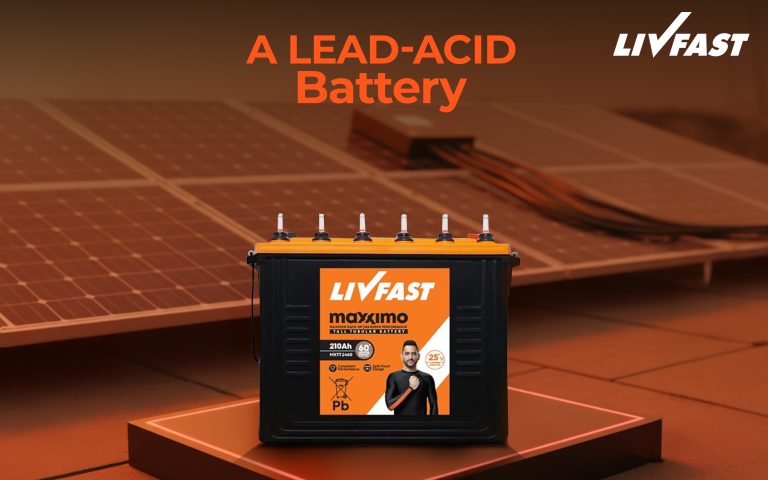
What to See Before You Buy A Lead-Acid Battery for Your Inverter or Solar System?
Home What to See Before You Buy a Lead Acid Battery for Your Inverter or Solar System by Power backup is no longer a luxury. For many homes and businesses, it is a daily necessity. Inverters and solar systems have become common because they offer control and comfort during power cuts. The performance of these systems depends heavily on one component: the battery. Many people buy a lead-acid battery in a hurry. They focus only on price or a particular feature. Later, they face low backup time, frequent water loss, or early failure. That usually happens because the basics were ignored. Buying the right battery is not complicated. You just need to know what to check before making a decision. This guide explains the most important factors to consider before buying inverter battery that actually matches your inverter or solar system. Battery Capacity and Load Calculation One of the most important factors to consider before buying inverter battery is battery capacity. Battery capacity decides how long your inverter or solar system will support your load. It is measured in ampere hours. Choosing the wrong capacity is one of the most common mistakes. A low-capacity battery drains quickly. An oversized battery, on the other hand, increases cost without adding real benefit. Before buying, you must understand your power requirement. Things you should calculate: Total wattage of appliances you want to run Number of hours you expect backup The efficiency of your inverter or solar system System voltage requirement A basic load may include lights and fans. A heavier load may include refrigerators, TVs, and pumps. Each appliance adds to the total demand. The battery must handle that demand comfortably. Tubular battery capacity calculation Usage Scenario Suggested Capacity Light home use 100Ah to 120Ah Medium home use 150Ah to 180Ah Heavy load or solar 180Ah to 220Ah Correct capacity ensures stable tubular battery backup time and longer battery life. It also reduces stress on the inverter system. Battery Type and Construction Quality Lead-acid batteries are available in different designs. Each type performs differently under load and charging conditions. For inverters and solar systems, deep-cycle performance is important. This allows the battery to discharge deeply and recharge repeatedly. Common lead-acid battery types Flat plate batteries Tubular batteries Sealed lead-acid batteries Tubular batteries are widely preferred for inverter and solar use. They offer better heat tolerance and longer service life. Construction quality matters just as much as type. Internal plates, separators, and container strength affect durability. Signs of good construction: Thick positive plates Corrosion-resistant alloy Strong outer container Proper ventilation design A well-built battery handles power cuts better. It also performs consistently over time. Compatibility with Inverter or Solar System Not every lead-acid battery works well with every system. Compatibility must be checked carefully. Inverter systems require batteries that can deliver steady power. On the other hand, solar systems need batteries that handle daily charging cycles. Things to confirm: Battery voltage matches system voltage Charge controller settings support the battery Depth of discharge tolerance is adequate Charging current limits are suitable Using an incompatible battery leads to poor charging. It also increases heat and reduces lifespan. Always check the system specifications before buying. This avoids performance issues later. Charging Cycles and Daily Usage Pattern Charging behaviour affects battery health. This is especially important for solar setups. Solar batteries charge during the day and discharge at night. This happens every day. The battery must be designed for such cycling. What to look for: High cycle life rating Stable performance under partial charge Good charge acceptance rate Batteries not designed for frequent cycling wear out quickly. They lose capacity faster than expected. Choosing the right battery ensures efficient energy storage. It also improves overall system reliability. Maintenance Requirements and Water Topping Lead-acid batteries need maintenance. Ignoring this shortens battery life. Some batteries require frequent water topping, while others are designed for lower maintenance. Maintenance aspects to consider: Ease of checking the electrolyte level Water consumption rate Vent cap accessibility Cleaning and inspection needs Tubular batteries generally offer lower water loss. They also tolerate heat better. Proper maintenance improves backup performance. It also prevents sudden battery failure. Installation Space and Ventilation Safety Lead-acid batteries release heat and gases during operation. Improper placement causes overheating and corrosion. Safe installation guidelines: Install in a dry and ventilated area Avoid direct sunlight exposure Keep away from living spaces Ensure a stable and level surface Adequate airflow helps the battery operate efficiently. It also extends service life. Warranty Coverage and After-Sales Support Warranty is also among the most important factors to consider before buying inverter battery. Warranty reflects the manufacturer’s confidence. It also protects your investment. A clear warranty policy makes a big difference. Things to check before buying: Warranty duration Replacement or repair terms Claim procedure clarity Availability of service centers After-sales support is equally important, as quick assistance saves time and effort during issues. Brands with strong service networks offer better peace of mind. Why Livfast Lead Acid Batteries Are a Practical Choice Livfast batteries are built for demanding power conditions. They are suitable for both inverter and solar applications. Our focus is on reliability and long-term performance. Key strengths of Livfast batteries High-quality tubular technology Optimised for deep discharge cycles Durable construction for extended life Strong service and support network Livfast batteries deliver consistent backup during long outages. They are designed to perform under daily power challenges. This makes them a dependable option for homes and businesses. Conclusion Choosing a lead-acid battery should never be rushed. It is a long-term decision that affects daily comfort and productivity. Understanding capacity, compatibility, maintenance, and safety helps you avoid costly mistakes. A well-matched battery improves backup time and system efficiency. When quality and reliability matter, focus on proven performance rather than shortcuts. Livfast lead-acid batteries offer a balanced combination of durability, support, and consistent power. With the right battery in place, your inverter or solar system works the way it should, every single day! FAQ’s General Which type of lead-acid
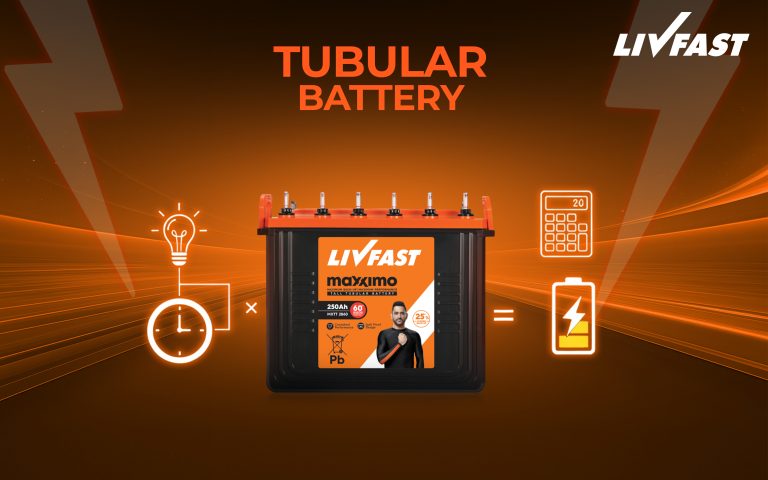
How To Calculate The Tubular Battery Capacity?
Home How To Calculate The Tubular Battery Capacity? by If you’re getting an Inverter, choosing the right battery capacity is super important. The right battery capacity means you get exactly the power you need, without the need for any form of overpaying, while also getting sufficient backup for your needs. Undersized batteries can come up with problems like voltage drop, shortened backup time, premature battery death and a lot of other problems, while an oversized battery can result in issues like chronic undercharging, long charging times, wasted energy, and higher costs. Which is why knowing how to calculate tubular battery capacity is a really important skill in today’s day and age. Here, Livfast has a quick and easy guide on tubular battery capacity calculation. What is Tubular Battery Capacity? Before you learn to calculate tubular battery backup time, you need to understand what tubular battery capacity is. To put it simply, it is measured with a number called the Amphere-Hour rating. But what is it? Ampere hours, or Ah, is the amount of energy charge in a battery that lets 1 ampere of current flow for one hour. In other words, 1 Ah is the rating that shows storage capacity or how much current it can supply. The unit is a good way to figure out how much energy a rechargeable battery or deep-cycle battery can hold. The following is how Ah is written in math: Amp hour (Ah) = Current (I) times Discharge time (T) You can use this example: a battery that pulls 30 amps (A) and is depleted in 30 minutes: 30 A is the current. Time to discharge: 30 minutes (0.5 hours) Ampere hour is 30 times 0.5, or 15 Ah for one hour. Understanding Tubular Battery Charging Voltage Before selecting or sizing a tubular battery, it’s important to understand the tubular battery charging voltage chart. This is because incorrect battery charging habits are often one of the most common reasons for poor backup performance and reduced battery life. Tubular batteries require specific voltage ranges during different charging stages to ensure efficient charging without overcharging or undercharging. Charging voltage determines how safely and completely the battery is recharged after a power cut and provides consistent power during the next power cut. How to Calculate the Tubular Battery Capacity? Now, let’s take a look at how we can calculate the tubular battery capacity, and for that, we’ll take a structured approach: Key Factors Required to Calculate Tubular Battery Capacity Firstly, these are the key factors you need to keep in mind when calculating tubular battery capacity, they are: Total Load in Watts: The total power consumption of your house Required Backup Time: How much backup time do you actually need Battery Voltage (12V / 24V): Single battery vs multiple batteries Inverter and Battery Efficiency: Ensure 80% efficiency to make the calculation seamless. Formula to Calculate Tubular Battery Capacity Now, you need to know the formula of how to calculate tubular battery capacity: Battery Ah = (Total Load in Watts × Backup Hours) ÷ (Battery Voltage × Efficiency) Step-by-Step Tubular Battery Capacity Calculation Step Description Calculation Result Step 1 Calculate total connected load Fans (2 × 75W) = 150WLights (4 × 15W) = 60WTV = 120WWi-Fi Router = 20WMiscellaneous = 175W Total Load = 525W Step 2 Multiply by the required backup time 525W × 4 hours 2100 Wh (watt-hours) Step 3 Account for battery voltage and efficiency 2100 ÷ (12V × 0.8 efficiency) 218 Ah (approx.) Step 4 Select the nearest higher battery capacity Available options: 200Ah, 220Ah Choose 220Ah battery It’s always recommended to round up the figure of your required battery if it’s a non-rounded number. This is because it will ensure proper reliability, and your tubular battery backup time will be reliable during power outages. Practical Examples for Home and Solar Use Example Typical Load Backup Needed How the Calculation Works Recommended Battery Capacity Example 1: Medium Home Inverter Setup 400–450W (fans, lights, TV, Wi-Fi) 3–4 hours A 400–450W load running for 3–4 hours needs roughly 1200–1800Wh. Dividing this by 12V and allowing for inverter losses gives a practical requirement of around 150–180Ah. 150Ah to 180Ah tubular battery – ideal for most 2–3 BHK homes Example 2: Heavy Load or Long Backup Requirement 700–1000W (fridge, multiple fans, TV, lights) 4–6 hours High loads drain batteries faster, so a single battery struggles. Even if the math shows 250–300Ah, it’s safer and healthier to split this across multiple batteries. Two 150Ah or two 180Ah batteries (24V system) for better performance and longer life Example 3: Solar Tubular Battery Calculation 300–500W average solar load Day–night cycle (6–10 hours) Solar batteries are discharged slowly over many hours. That’s why C10-rated capacity matters more than label Ah. The battery must store enough energy during the day to last through the night. 150Ah–220Ah C10 solar tubular battery, depending on night usage Conclusion Now, you must be aware that knowing how to calculate tubular battery capacity is quite important; it allows you to make a more informed choice. Now, sometimes, you not only need reliability, but speed as well, and this is why you should go with Livfast, as you get a 25% higher charging speed than the competitors in the market. Our inverters and batteries come with: 25% Faster Charging Low Voltage Performance 25% Longer Backup Consistent Performance FAQ’s General How to check tubular battery capacity? Use the formula Battery Ah = (Total Load in Watts × Backup Hours) ÷ (Battery Voltage × Efficiency) to calculate the capacity. Is this Helpful? Which is better, a 150Ah or a 200Ah battery? A 200Ah battery is significantly better due to the longer run time for the same load. Is this Helpful? How long can a 200Ah battery run a 3000-watt inverter? For low-power uses, a 12V 200Ah battery is the ideal choice. It can run a 1000W device for 1 hour and 55 minutes, but a 3000W load will use it up in just 38.4 minutes. Is this Helpful?
How to Choose the Best Inverter and Battery Combo for Your Home?
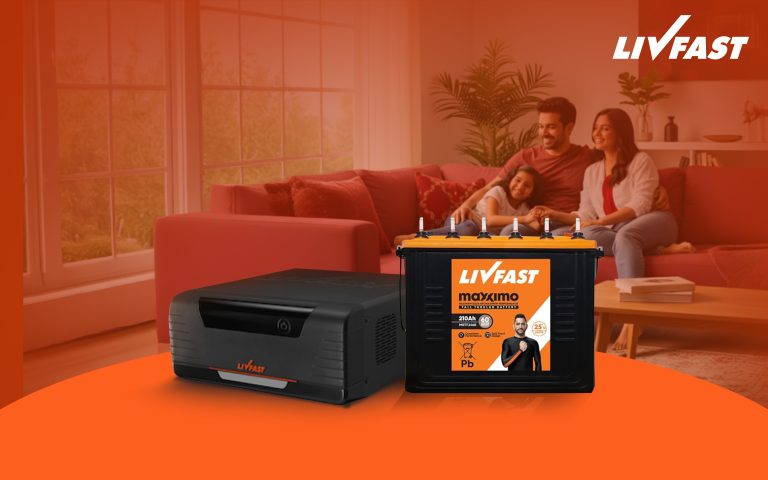
Home How to Choose the Best Inverter and Battery Combo for Your Home by Powercuts in India are quite common. According to the 2019 Global Competitiveness Index by the World Economic Forum, India ranked 108 out of 141 countries in electricity supply quality. This shows how much urban power outages have been happening for quite some time. Frequent power outages, voltage drops, and fluctuations can hurt appliances, lower productivity, raise production costs, and lower standards of living, which is why a lot of people would rather invest in backup power solutions, like an inverter and an inverter battery. Randomly picking an inverter and battery combo and calling it a day is not the right approach. Here at Livfast, we are committed to providing you with the best performance, and it comes with transparency. Which is why in this article, we’ll be telling you how to select an inverter and battery for home. Understanding Your Home Power Needs The inverter and battery buying guide for home starts with you calculating how much power your home needs. Step Description Formula Example 1 List appliances & note wattage Check device label/manual (W) TV = 100W 2 Calculate daily watt-hours (Wh) Wattage × Hours used per day 100W × 4h = 400 Wh 3 Convert Wh to kWh Wh ÷ 1000 400 ÷ 1000 = 0.4 kWh 4 Calculate monthly usage Daily kWh × 30 0.4 × 30 = 12 kWh 5 Find total monthly consumption Sum of all appliances’ kWh Depends on the household 6 Calculate monthly cost (optional) Total kWh × Tariff (₹/kWh) 12 × ₹X = ₹X However, if you’re busy and feel like this is quite time-consuming, you can simply list down your appliance wattages and use any online calculator to calculate the load. Most of them are accurate, and you’ll get your starting point. Here’s a sample load calculation for your reference: Appliance Wattage per Unit (W) Quantity Total Load (W) LED Bulb 10 W 6 60 W Ceiling Fan 60 W 2 120 W Tube Light 18 W 3 54 W Television 80 W 1 80 W Refrigerator 200 W 1 200 W Total Connected Load 514 W Recommended Load (with 25% Safety Margin) 643 W Choosing the Right Battery Type Now, you need to pick the right battery type. There are two types of batteries: Lead-acid batteries and Lithium-ion batteries. Lead-acid batteries like the one used in MXST 1648 are cost effective-reliable and easily work well with deep discharge cycles. Their pros include: Low cost Good for heavy loads Proven Technology While its cons include: longer charging time periodic maintenance required shorter lifespan On the other hand, Lithium-ion batteries are also popular. They have a higher upfront cost but are relatively low maintenance, and options like Livfast Lithium Alpha DT 100Ah come with features: Faster charging (2× lead-acid speed) Longer lifespan (6 times longer than conventional batteries) Low maintenance / zero water topping Backup example: 3+ hours at 400W IP55 rating – ideal for humid areas App-based monitoring for state-of-charge, health, and backup time. Picking the type of battery depends on your needs and wants, but the baseline is that the battery you pick should match the Load. Selecting the Right Inverter Now, here’s a table that would make the choice of how to select inverter and battery quite simpler for you: Criteria Small Home Medium Home Inverter Capacity 900 VA Higher VA options Power Output (Watts) 765 W Suitable for medium loads Charging Current Standard charging Up to 22A fast charging Ideal Load Range ≤ 650–750 W 800–1500 W Waveform Type Pure Sine Wave Pure Sine Wave Suitable Appliances Fans, lights, TV, refrigerator Multiple fans, lights, TV, fridge, and additional devices UPS Mode Yes (instant switchover) Yes Overload Protection Yes Yes Deep Discharge Protection Yes Yes Solar Compatibility Optional Available (model dependent) Display Type LCD LCD with advanced indicators Charging Technology Smart / AI-based charging AI fast charging Livfast Advantages in Indian Homes So the question is, why Livfast? Well, there are many reasons. Firstly, Livfast as a brand has stood the test of time. We make our products right here in India and have earned the trust of millions of our customers. Also, our inverter and battery combos have been designed specifically to deal with voltage fluctuations and have overload and deep discharge protection for batteries. You also get features like fast charging even at low voltages, which make them more convenient, and unlike most foreign brands, our designs have been made keeping the indian environment and consumer especially in mind. If you match the right inverter and the battery, you also tend to get longer backup options, and Livfast provides 25% more backup than normal options. Recommended Livfast Inverter & Battery Combos If you feel like you just want an easy solution, here’s a Inverter and battery combo that suits both small and medium homes. Home Type Inverter Battery Backup* Warranty Best For Small Home (≤800W) Vision HDX 1100i (900VA) Lithium Alpha DT 100Ah 3+ hrs 3 yrs Fans, lights, TV, fridge Medium Home (800–1500W) SmartFlash / Flashcharge Tubular 150–200Ah 4–5 hrs Up to 3 yrs Larger homes, pumps, washer *Backup at ~400W load. Conclusion To put it simply, you need to make sure that your needs match the inverter’s capacity. It should be able to meet or slightly exceed your daily power needs. If you go too small, you could overload. On the other hand, getting too big can be a waste of time and money. Also, think about surge power without tripping. Finally, see if ratings meet your needs now and in the future. FAQ’s General How to calculate the inverter and battery capacity for a home? List down all your appliances, add their wattage, and then you have a number which becomes your baseline for picking an inverter and battery combo. Is this Helpful? How many hours will a 200Ah battery last? The total load for the same is 350 Watts. So, 200*12/350 = 6.8 hours (give or take).
Factors That Can Affect Scooter Battery Life
Home Factors That Can Affect Scooter Battery Life by Your scooter has been having problems starting; the fuel tank is full, but even then, it refuses to start properly. You worry something is wrong, and have now decided to take it to your trusted mechanic, and after an inspection, they reveal to you that the battery has been damaged. Go talk to any mechanic, and you’ll find this isn’t a one-of-a-kind case, and it happens more than you can think, so the question is: why did it happen? Well, there are many factors that affect the scooter battery life, some in your control, others aren’t, and this is why in this article, we’re about to discuss Scooter batteries and the factors that affect their life. Types of Scooter Batteries and How They Age First, the two types of batteries that are most commonly used to power electric scooters. The first one is a regular battery, like a lead-acid battery. These batteries are usually cheaper to buy, but they don’t hold as much energy and don’t last as long. The second type of battery is more advanced, like lithium-ion batteries, which have a higher energy density, charge faster, and last longer. Next, a quick overview of three common battery terms that you may have read or heard about. Voltage: When an electric current flows through a circuit, voltage is just a way to measure how strong or weak it is. Think about how water pressure affects the water flow. The higher the voltage of your battery, the faster and longer your scooter will go. It will also make it easier to climb hills and carry heavier loads. Amp Hours (Ah): Amp hours (Ah) are another way to rate batteries. The number of amps that can be delivered in one hour is the amount of electrical charge. The more amp-hours there are, the more energy is stored. This gives you more range and mileage. Watt Hours (Wh): Battery capacity is measured in watt-hours (Wh), which is the amount of electrical energy that can be used over one hour. Just like amp-hours, more watt-hours in a battery means more energy stored, which gives it a longer range. Charging Habits That Influence Battery Life Now, one of the main reasons why your battery life gets affected is the charging habits. If the battery is facing deep discharge cycles of at least 20-30%, then there’s a chance its life can deteriorate, especially if it’s the VRLA lead acid kind. Also, you need to make a note that under any circumstances, do not overcharge. Overcharging can significantly damage the battery and can cause electrolyte deterioration due to overheating. There are a few charging differences between the two kinds of batteries you need to keep in mind: Aspect Lead-Acid Batteries Lithium-Ion Batteries Charging Style Prefer full charge cycles; frequent partial charging can reduce capacity Partial charging works well and does not harm battery life Deep Discharge Impact Deep discharges significantly shorten lifespan More tolerant, but repeated deep discharge still causes wear Overcharging Risk High risk of overheating and internal damage Lower risk due to built-in battery management systems (BMS) Usage Patterns and Riding Conditions Now, everyone loves to go high speeds on their scooters every now and then, and there’s nothing wrong with being a little fond of adventure, but it is best to avoid usage patterns like: Sudden Accelerations Heavy loads Rough terrain These patterns effectively put a strain on the battery, and the more frequently you use these usage patterns, the more likely you are to damage your battery. These riding habits are the primary contributors to scooter battery problems. Additionally, driving your scooter on rough terrain can also significantly lower its battery life, as the battery isn’t actually made to handle that kind of stress. Environmental and Storage Factors Now, if you have recently come across a scooter battery failure, chances are certain factors weren’t even in your control. For example, Indian summers aren’t a joke; you have to deal with immense heat. Now, you’re not the only person who suffers from this heat; your scooter batteries also face issues from this heat exposure. We already mentioned overheating from overcharging, and the exact same thing can be caused by extreme heat as well. Also, if you keep your scooter parked in areas with extreme sunlight, this also means you’re losing out on precious battery life as well. Always make sure to park your scooter in a cool and shaded place for maximum protection. Maintenance Practices That Support Battery Health Now, there are some maintenance practices that you can incorporate to ensure that your battery life is maximised for your scooter. Maintenance Aspect Why It Matters for Battery Health Clean, Corrosion-Free Terminals Prevents resistance in current flow, ensuring efficient charging and power delivery while reducing heat buildup Secure Electrical Connections Avoids power loss, irregular charging, and voltage drops caused by loose or unstable connections Overall Vehicle Maintenance (Tyres, Lubrication) Proper tyre pressure and lubrication reduce mechanical resistance, lowering the electrical load on the battery Periodic Inspections Helps identify early issues like corrosion, loose wiring, or abnormal discharge, even in “maintenance-free” batteries Conclusion It must be clear by now that scooter battery lifespan isn’t just black and white, and is shaped by multiple aspects. If you’re looking for a good scooter battery for your scooter, you should stick with a brand that is reliable and has stood the test of time. Livfast 2-wheeler batteries are made for people who ride every day. They offer consistent performance, so your scooter can easily handle the city’s daily and weekend work. With the quick start feature, your engine starts right away with fire, so you don’t have to worry about having to push-start it in traffic. Installing a Livfast scooter battery feels less like a chore and more like an upgrade. FAQ’s General How to increase scooter battery life? While there are many tips, a good starting point would be: Don’t leave it in direct sunlight for long
What Is Cold Cranking Amps (CCA) and Why It’s Crucial for Your Car Battery?
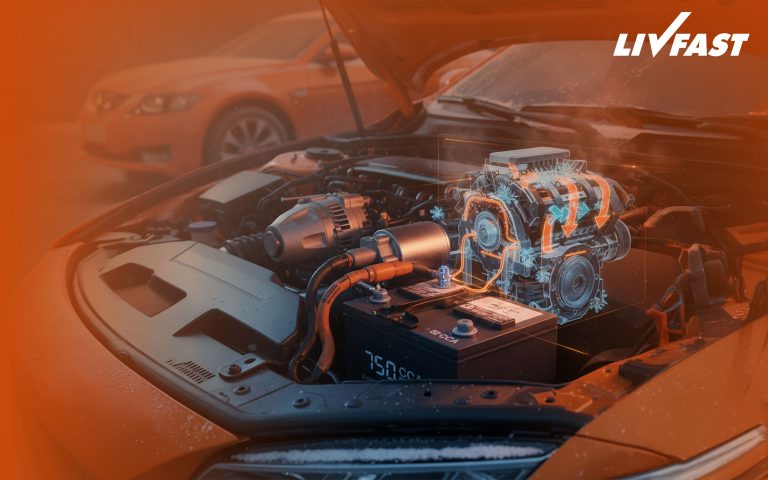
Home What Is Cold Cranking Amps (CCA) and Why It’s Crucial for Your Car Battery? by When it is a freezing winter morning, you turn the key in the car and… it does not start. The engine turns slowly, struggles, and gives up. Frustrating, right? Most car owners accuse the battery of being evil, yet the guilty party can usually be found in a specification that people rarely discuss: CCA of the battery. Knowledge of cold cranking amps may be all that separates your car from starting, or leaving you standing out in the cold. This practical guide will help decode what is CCA in battery, understand its impact on your car, and make smarter battery choices than you did before. Because when winter comes, you do not want to be guessing; you want to be certain that your car will start every single time. Understanding CCA: What It Really Means What are cold cranking amps (CCA)? In simple terms, cold cranking amps measure how much electrical current (in amps) your battery can deliver at 0°F (−18°C) for 30 seconds while maintaining a minimum voltage of 7.2 volts. It’s a standardised test that simulates the battery’s ability to crank or start an engine in cold temperatures. Consider it in the following way: suppose that your battery is a fuel tank. The CCA rating informs you about the speed with which it can pump fuel even in case the liquid is thickened by cold. Higher CCA = more amps = stronger starting power in extreme conditions. Why 0°F? Because battery chemistry slows down dramatically in cold weather. The chemical reaction inside lead-acid batteries becomes sluggish, reducing available power by 30–50%. Batteries with much higher cold cranking amps are much-needed by people living in extreme cold regions and sub-zero climates to overcome this chemical resistance and start their engines in a reliable way. Why Cold Cranking Amps Matter More Than You Think? Here’s the truth: not all batteries are created equal, and specs matter. Your car’s starting system demands an enormous burst of power in mere seconds, especially in winter. A battery with inadequate CCA in battery ratings can: Leave you stranded on freezing mornings, Damage your alternator from repeated hard starts, Force expensive roadside assistance calls, and Shorten your battery lifespan by 10–30% in harsh climates. The real kicker? The majority of car owners never look at this requirement until one morning their engine fails to start. By then, it’s too late. Choosing a battery that truly matches your vehicle’s needs and understanding what is CCA in battery ratings goes beyond convenience; it’s about reliability, safety, and protecting your entire electrical system. It’s the difference between predictability and frustration. And if you’re thinking, do higher CCA batteries last longer? The short answer is not directly. CCA rating measures starting power, not total lifespan. How Much CCA Does Your Car Need? This depends on your engine size and climate. Small engines (4-cylinder, under 2L) typically need 400–550 CCA, Mid-size engines (V6, 2–3L) need 550–750 CCA, Large engines (V8, over 3L) need 750–1,000+ CCA, and Diesel engines often require 1,000+ CCA due to compression ignition demands. But this is what most people forget: climate is of great importance. In warm climates (South India, coastal), a battery with a low CCA rating of the engine would do just about fine. But if winter temperatures drop below 10°C, you should choose a battery with 150–200 CCA points higher than your car’s baseline requirement. Your car’s manual or the sticker under the hood lists the recommended CCA. Don’t guess, check it before you buy. What to Do When Things Go Wrong? When your car has battery cranking problems (slow cranking, clicking, or low light when cranking the battery), check the following: Is the battery old (3–4 years+)? Test it with a multimeter (12.6V+ at rest is healthy). Are the terminals corroded? Corrosion inhibits the flow of current; clean with baking soda and water. Is your alternator charging properly? A dead alternator won’t recharge the battery after each start. Did you match the CCA rating? A severely undersized battery will always crank slowly in cold weather. Livfast Provides Reliable Batteries with High CCA When your car needs reliable starting power, a low-quality battery with inflated CCA claims won’t help. Livfast car batteries have accurate CCA ratings for Indian cars, taking into consideration monsoon humidity, salty coastal winds, and cold snaps in winter. Every Livfast battery provides accurate CCA ratings tested to global standards, deep-cycle plates that handle repeated hard starts, and anti-corrosion terminals that maintain current flow. Regardless of whether you have a small hatchback or a diesel SUV, Livfast batteries provide the cold cranking amps your car actually requires, no guessing, no stranded mornings. FAQ’s General What are solar farms? Solar farms are also referred to as solar fields and solar parks. These areas have numerous solar panels placed across acres of land for maximum utilisation of solar energy. The power generated at solar farms is used to feed directly into the grid. Is this Helpful? How to increase solar panel efficiency? You can increase the PV solar power system efficiency by considering the following points: Choose the photovoltaic panels with high efficiency Avoid the installation of panels in shaded areas Get the solar panel installed by a professional to ensure the right direction, tilt, wiring, and spacing Ensure regular maintenance by cleaning the panels Is this Helpful? What are the benefits of a PV solar power system? There are numerous benefits of incorporating a PV solar power system into both residential and commercial areas. These include providing clean, renewable, and sustainable energy, lowering energy bills, increasing property value, and offering power in remote areas. Is this Helpful? What are the different types of solar panels? The main types of solar panels are monocrystalline, polycrystalline, and thin-film solar panels. The more advanced types of solar panels include PERC, bifacial, and others. Is this Helpful? Are solar panels effective during cloudy days? Yes, solar
Photovoltaic Technology Explained: How Solar Cells Generate Electricity
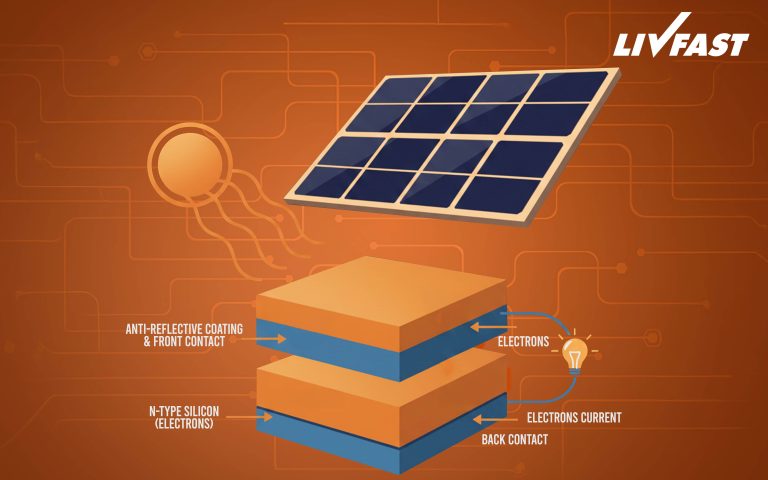
Home Photovoltaic Technology Explained: How Solar Cells Generate Electricity by Every time sunlight hits a rooftop, a huge part of it goes unused and wasted, unless a photovoltaic solar system is there to capture it. With the quiet scientific process working in the background, you simply get to witness the noiseless generation of electricity that can lower your electricity bills. From powering calculators to running households and factories, photovoltaic technology is capable of so much. This article offers an introduction to photovoltaic technology, enlightens you about certain confusing terms, and helps you understand the efficiency. Read on to know. What is Photovoltaic Technology? Photovoltaic or PV technology is the technique of converting sunlight directly into electricity. It works on a simple idea, which is, when sunlight falls on special materials (semiconductors), they produce an electric current. The result is clean and renewable energy that can power small devices to large solar farms. PV technology is highly beneficial for the environment as it reduces dependence on energy generated from fossil fuels. Solar Cells Photovoltaic cells, also referred to as solar cells, are the basic building blocks and key components in converting sunlight into electricity. The solar cells are made of a semiconductor like silicon, a natural material found in sand. Its durability, ease of processing, and high efficiency in capturing sunlight make it a worthy choice. The single photovoltaic device is very small, with a size varying from 0.5 inches to 4 inches. Generally, it produces 1 to 2 Watts of power, which is enough to power calculators or wristwatches. For large-scale applications, the cells are sandwiched between protective materials like glass and/or plastics. Mode of Action of PV Technology Here is the stepwise insight into how a photovoltaic solar system works: Step 1: Sunlight Reaches Solar Cells The sunlight, comprising photons (the tiny packets of energy), falls on the semiconductor material inside the photovoltaic (PV) cell. The cells absorb the energy of sunlight. Step 2: Electron Excitation The absorbed energy is transferred to the electrons in the semiconductor. The electrons are another type of tiny particle with a negative charge. When they gain extra energy from sunlight, they become active and start moving. Step 3: Current Generation An internal electric field in the solar cell guides these free electrons in a single direction. Their movement forms a direct current (DC) and voltage potential. Step 4: Electricity Flow The electrons flow through an external circuit, producing electrical energy as DC power. Step 5: Conversion by Inverter Since homes and appliances use alternating current (AC), the DC electricity from solar panels is sent to an inverter. This device converts DC into AC electricity, making it usable for everyday electrical devices. What Do These Mean: Photovoltaic Cells, Panels, and Arrays Photovoltaic technology is associated with multiple confusing terms, such as cells, panels, and arrays. These are simple once you understand. Photovoltaic Cells: As already discussed, these are the smallest building blocks of a PV solar power system. Each cell produces a small amount of power. Solar Panels or Modules: A solar panel or module is formed by connecting many photovoltaic cells together. Since one cell produces very little electricity, they are combined to increase the total power output. You can recognise solar panels or modules as the flat rectangular units commonly seen on rooftops. Solar Arrays: A solar array is a group of multiple solar panels connected together. These are used when higher electricity generation is needed. Hierarchy of photovoltaic terminologies: Solar Cell → Solar Panel → Solar Array Efficiency of Photovoltaic Cell The PV efficiency tells us how much electricity it can produce from the sunlight it receives. This is measured by the solar panels, which are tested under ideal light conditions, i.e., 1000 watts of sunlight per square meter at 25°C, using a solar simulator. The electricity produced in this test is called peak power. For instance, if a 1 m² panel produces 200 W, then its efficiency is 20%. The highest possible efficiency for a traditional PV cell is about 33%. It is referred to as the Shockley-Queisser limit. The actual electricity produced by a panel depends on efficiency and the amount of received sunlight. It means the regions receiving more sunlight will have more PV efficiency and produce more electricity compared to the areas receiving less sunlight. Factors Affecting Solar Panel Efficiency The amount of sunlight is not the only parameter impacting the electricity generation from a solar panel. There are other factors as well. Know them to get the high PV efficiency for your panel: Temperature The efficiency depends on temperature, with cooler temperatures improving it while higher temperatures reducing it. Shading Shade from buildings and trees blocks sunlight and reduces power production. Further, it may also create hot spots that damage the panel. Climate The angle of the sun (angle of incidence) and atmospheric conditions, such as cloud, moisture and haze, affect the amount of sunlight reaching the panel. Hence, it impacts the efficiency as well. The maximum energy can be generated when the sun is perpendicular to the face of the solar panel. Age and Maintenance Degradation of the material as it ages affects the efficiency of the solar panel. Adding to it, the gathered dust, dirt, and debris block the sunlight and reduce performance. Conclusion Photovoltaic technology, adoptable even in residential areas and busy cities, has become one of the most common solutions for generating clean and renewable energy. These versatile solar power systems can be installed in compact areas such as rooftops and other urban spaces. The result is reduced dependence on fossil fuels and, hence, lower dependence on grid electricity. A photovoltaic solar system works on the simple principle of harvesting sunlight to generate current. The current then flows through the inverter to power routine use appliances. The number of photovoltaic cells, the angle of the sun, sunlight hours, and the temperature are some factors that influence the generated output. Get Your Solar Panels Now at Livfast Considering the different aspects while
What Is a PV Inverter and How Does It Work?
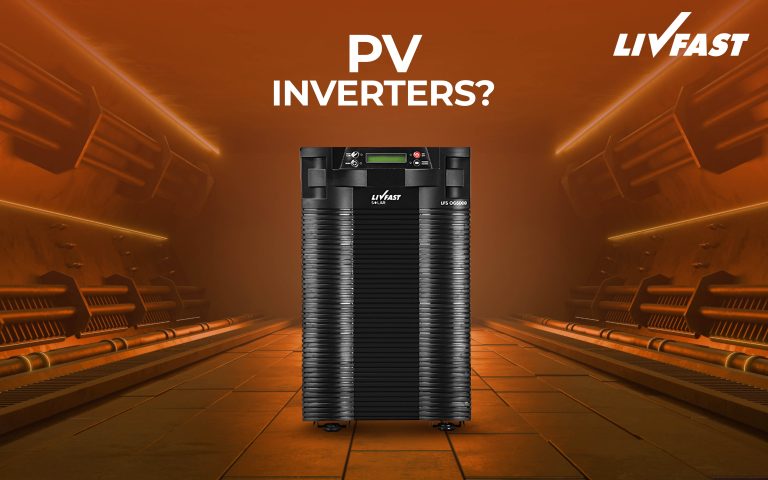
Home What Is a PV Inverter and How Does It Work? by Solar energy is one of the fastest-growing power sources on Earth. Little do you realise that there’s one tiny hero inside every solar system that makes the whole thing actually usable. Yes, the photovoltaic inverter. A simple name with a big job. If solar panels are the muscles of a solar setup, the inverter is the brain. It keeps everything moving, flowing, converting, and behaving. So let’s break it down to understand better. PV Inverter Meaning: The Simple Explanation Let’s start with the basics. What is a PV inverter? It’s a device that converts the direct current (DC) electricity generated by solar panels into alternating current (AC) electricity. Why is this conversion needed? Because your home, office, and practically every appliance you own say they want AC. Your fridge, TV, and laptop charger? AC. But guess who doesn’t? Your solar panels. They say DC. And that’s where the photovoltaic inverter walks in like a translator who knows both languages fluently. So the PV inverter meaning is simple: It converts DC to AC so your solar power becomes usable power. Why the Inverter is Called the “Brain” of a PV System Calling it the brain is not a dramatic nickname. Without the inverter, your solar setup literally sits there doing… nothing. There is no flow, no conversion, and thus no power. The inverter takes the raw energy, polishes it up, and sends clean, grid-friendly AC energy into your home or the electricity grid. It also makes sure the system stays safe, stable, and efficient. When do things take a more positive turn? When you invest in brands like Livfast. We integrate smart features into modern PV inverters. Our inverters maximise your solar energy usage with Livfast’s Real-Time Clock (RTC) Technology. They come with built-in human, battery and panel protection. Additionally, there is over-voltage/current protection in bypass mode. All of this ensures your system operates securely and reliably. The interactive LCD display lets you monitor system status, alarms, and solar energy generation. How a Photovoltaic Inverter Works Let’s take this up in a crisp, non-sciency way for a better understanding. 1. Solar panels generate DC power The sun hits the PV modules. Electrons wake up and start moving around. And that’s how the moving electrons lead to the generation of DC power. 2. The inverter receives this DC This is like a “raw material” stage. The inverter receives the DC and gets to work on it. 3. It changes DC into AC This is the main task. Your photovoltaic inverter flips the current direction back and forth, creating AC. Nice, clean, usable electricity. 4. It syncs with the grid If your system is grid-connected, your inverter must match the grid’s frequency. 5. It optimises your solar power This is done through MPPT (Maximum Power Point Tracking). The inverter constantly searches for the sweet spot where your panels give maximum output. Every solar panel has a point where it gives maximum power. But that point moves. Clouds roll by. Panels heat up. Shadows shift. Your inverter tracks this moving point in real time through MPPT. And that’s how your solar system squeezes every drop of power from the sun. 6. It monitors and protects the system. It checks for faults. It shuts down in unsafe conditions. Also, it prevents electrical mishaps. Basically, it’s the responsible adult in the solar family. Types of PV Inverters Not all PV inverters are the same. Different setups, needs, budgets. Here are the main types. Inverter Type How It Works / Key Features Best For Important Points String Inverters Classic choice. Simple. Reliable. Panels are connected in “strings” that feed into one inverter. Homes, shops, small businesses. If one panel underperforms (shade, dirt), the whole string is affected. Microinverters Tiny but powerful. Each panel gets its own mini inverter. Offers better performance in partial shade, panel-wise optimisation, and design flexibility. Homes with shading issues. Installations that need panel-level monitoring. More expensive. Quality comes at a price. Central Inverters Large, powerful units used in big solar plants. Handle hundreds of kW to MW-scale. Installed in dedicated rooms with cooling systems. Solar farms and large commercial PV setups. Overkill for homes. Large size and complex installation. Hybrid Inverters Multi-taskers. Work with grid + batteries. Auto-balancing between sources. Great for backup needs. Popular in areas with unstable grids. Homes and businesses wanting solar plus battery backup. Hybrid setups may need approvals like net metering. Off-Grid Inverters Fully independent from the grid. Run entirely on batteries. Used where grid supply is unavailable or unreliable. Remote locations, cabins, rural homes, off-grid living. No grid syncing. Requires enough battery storage to avoid downtime. Key Features That Make a Photovoltaic Inverter Good Let’s make this simple. If you’re choosing an inverter, look for these: High conversion efficiency: Modern inverters can reach 97–99% efficiency. That’s almost no loss. Smart monitoring: Apps. WiFi. Data logging. Real-time performance tracking. This helps you catch issues early. Strong safety features: Overvoltage protection. Earth fault detection. Anti-islanding. Grid failure cut-off. Cooling system: Inverters get hot. A good cooling system keeps performance stable, especially on scorching Indian afternoons. Weatherproof enclosure: IP65 enclosures are ideal. Dustproof, rainproof, outdoor-friendly features help too. Install it close to the modules and reduce wiring losses. Easy installation and maintenance: Nobody wants complicated wiring. Some inverters, including newer Livfast models, come with simplified layouts and plug-and-play setups. Why the Inverter Location Matters Hot inverter = lower output. Simple physics. Place it in a cool, ventilated area. Away from direct sunlight. Not inside a cramped box. Not next to a hot wall. A cooler inverter = longer life + higher efficiency. How PV Inverters Keep Your System Safe A photovoltaic inverter continually monitors: Voltage Current Temperature Grid status Overall system health If something looks off, the inverter takes action. Sometimes it warns you. Sometimes it shuts down completely. Either way, it keeps your system safe. Choosing the Right PV Inverter kW for Your Setup This part
What is a Hybrid Inverter? Meaning, Working, and Benefits
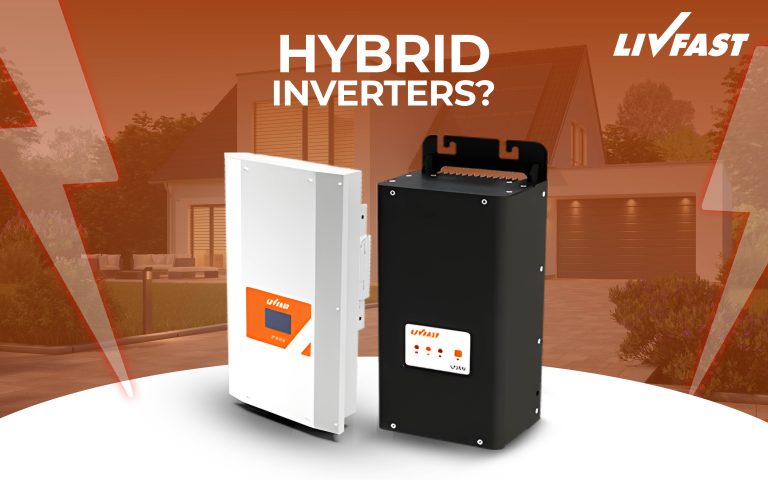
Home What is a Hybrid Inverter? Meaning, Working, and Benefits by You may have heard the term hybrid inverter if you have been researching backup power solutions for your home. While it sounds technical, a hybrid inverter is not just a stronger or upgraded inverter; it is a complete power management system that intelligently controls how electricity is generated, stored, and used within your home. In this guide, we’ll explain what a hybrid inverter is in the simplest way possible, how it operates in real-life scenarios, and why it is better to go with a reliable brand like Livfast to unlock a greater level of efficiency, a longer battery life, and a more reliable power backup experience. What is Hybrid Solar Inverter: Hybrid Inverter Meaning A hybrid inverter is a single unit capable of processing the energy of various sources at once: the solar panels, the batteries, and the electricity grid. Think of it as the “central brain” of your home’s power system. A traditional inverter just changes DC battery power into usable AC electricity during power cuts; a hybrid inverter does much more. It decides things like: When to use solar power, When to charge the batteries, When to draw from the grid, and When to feed excess solar energy back into the system. Still confused about what a hybrid inverter is? Suppose you are working, your sources of income are salary, savings, and a small side business. A good planner is aware of when to save, when to depend on the regular income, and when to resort to the side business to keep the expenses under control. A hybrid inverter acts in the same way as this planner. It evaluates solar, battery, and grid energy constantly and chooses the most efficient source at any given time. How Does a Hybrid Inverter Work? A hybrid inverter manages three energy sources: solar power for running appliances, battery storage for later use, and grid power when needed. It constantly switches between these based on availability and demand. During the daytime: It utilises solar power, then retains any power surplus in the battery, and some provide excess to the grid. During the evening or night: It goes on battery power to maintain necessary appliances. During a power cut: It continues supplying power seamlessly from the battery, unlike standard solar inverters. When the battery is low: It automatically switches to grid supply to maintain a stable output. Livfast provides hybrid inverters with this intelligent switching, which is one of the major hybrid inverter advantages for homeowners. Benefits of Hybrid Solar Inverter Here are the benefits of a hybrid solar inverter for your home. 1. Uninterrupted Backup, Even from Solar During the outages, hybrid inverters supply a constant flow of power by relying on batteries and solar panels. Unlike most traditional solar inverters that power off when the grid goes off, hybrids are designed in a manner that leaves essential circuits running. It means no sudden shutdown of routers, fridges, or medical equipment, but consistent power until the grid supplies. 2. Higher Energy Efficiency Hybrid inverters save on wasted power by utilising solar energy and smart switching of sources. They chose the cheapest source at any given time, and this reduces your monthly electric bill. The efficient selection of the source transforms into useful financial savings over time. 3. Longer Battery Life Hybrid inverters control charging rates and avoid deep discharges that stress batteries. Proper charge management and shallow cycles extend battery lifespan, reducing replacement frequency and total ownership cost. This is particularly necessary in a battery chemistry that is expensive to buy, like lithium. 4. Smart Load Management In a period of energy scarcity, hybrid systems will give priority to essential loads, such as lighting, fans, Wi-Fi, and automatically eliminate unnecessary ones. This targeted protection allows households to maintain comfort and connectivity during extended outages. It also eliminates overloads and enhances the reliability of systems. 5. Reduced Running Costs Since solar is used whenever available, dependence on expensive grid electricity declines. In the long run, this helps to reduce utility bills and increase the payback of solar and battery equipment. Normal Inverter vs Hybrid Inverter: Key Differences Feature Normal Inverter Hybrid Inverter Sources managed Battery only (plus grid when charging). Solar, battery, and grid — simultaneously. Operation during grid outage Energy is provided from the battery; solar often shuts down. Energy is provided from the battery + solar seamlessly. Battery charging control Basic charging from the grid or solar (if supported). Smart charging: optimises solar, time-of-use, and battery health. Energy optimisation Limited; the user must manage consumption. Automated prioritisation to reduce bills and maximise solar use. Scalability Adding solar/battery may need extra components. Designed for modular expansion; easier future upgrades. Cost vs functionality Lower upfront cost, fewer features. Higher upfront cost, greater long-term savings and control. Why Choosing a Good Brand Matters? A hybrid inverter makes complicated power choices. Poor-quality units may struggle with surge loads, offer unstable voltage, or charge batteries inefficiently. Livfast hybrid inverters focus on: Stable voltage output High conversion efficiency Strong surge-handling performance Protection against overloading, overheating, and voltage variation. These aspects can greatly enhance actual performance and reliability in the long run. Conclusion Now that you know what a hybrid inverter is and how a hybrid inverter works, it is easier to comprehend its importance. A hybrid inverter is a whole power management system that combines solar, grid, and battery power to supply efficient and long-lasting energy to power your home. When you invest in a trusted brand like Livfast, you get smoother performance, better savings, and more dependable backup during outages. Choosing the right hybrid inverter ensures you will have your home powered, secure, and ready for the future. Related Blogs What is an Inverter? Inverter Battery Life Explained Sine Wave vs Square Wave Inverter Parts of an Inverter Understand on-grid, off-grid, hybrid inverters FAQ’s General What is the life of a hybrid solar