


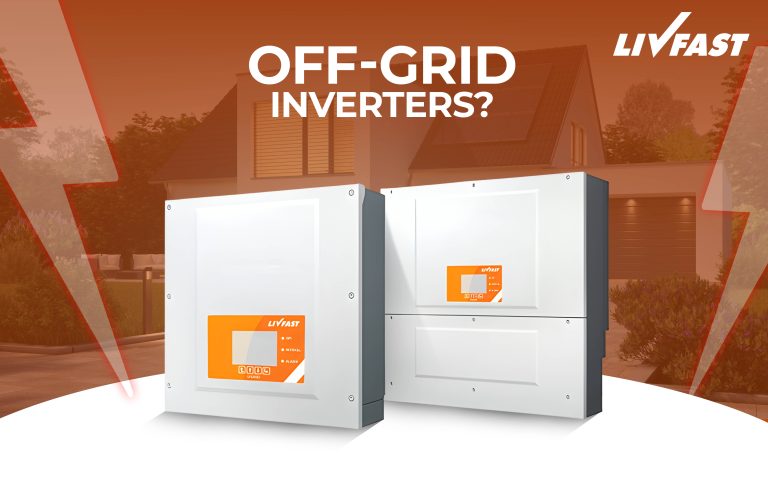
What Is an Off-Grid Inverter? Meaning, Working, and Benefits
Home What Is an Off-Grid Inverter? Meaning, Working, and Benefits by You recently moved and have only realised that your new town experiences power outages every second hour. Or you reside in the same place, and the electricity supplying corporation is acting up for some reason. Either way, opting for an off-grid inverter is one of those decisions that will serve you in the long term. In an increasingly warming world, they are sustainable as well as highly reliable devices for efficient power backup. So it’s extremely useful, but then, what is off grid solar inverter? Let’s dive in and understand the answer to that question. Off Grid Inverter Meaning: What It Is All of us are familiar with inverters. We know that certain power solutions are installed in the corners of our home. They provide a continuous power supply during a power cut. In practical terms, these inverters convert DC (Direct Current) power into household electricity called AC (Alternating Current) power. Thanks to these devices, our day-to-day activities can go on without disruptions. Solar inverters work similarly. The key difference between normal inverters and solar inverters is the source. In solar inverters, solar power from the PV (photovoltaic) system is converted to AC power like that of the utility grid, which can carry electrical load. But then, what is off grid inverter? An off-grid solar inverter carries out this conversion and supply process without being connected to the main grid. Generally spotted in regions that experience frequent blackouts and power cuts, off-grid inverters are highly efficient power backup devices. The abundant energy produced by the sun every day is utilised to power electrical appliances in such areas. No connection to the main utility grid is required in an off-grid solar system. It is, therefore, the most unique feature of standalone solar systems. Understand How Off-Grid Solar Inverters Function Acting in tandem with the solar panels and batteries is how off grid inverter works. An off-grid inverter works in collaboration with solar panels and battery banks to provide AC electricity to your home successfully. The entire off-grid solar system functions as a whole to power household appliances during long periods of outage. As a part of this system, here’s how the off-grid solar inverter functions: Step 1: Energy Backup The solar panels fitted onto the rooftop of the household/building capture solar energy. Raw energy is converted into DC power through the photovoltaic cells designed into the body of the panels. This DC electricity gets directed into the batteries through the off-grid inverter. A charge controller adjusts the voltage and frequency of the DC power to prevent damage to the battery bank and ensure safe storage. Step 2: Conversion During a power cut, the surplus DC electricity stored in the battery banks of the solar system is drawn. An internal switching mechanism is prompted into action to convert the DC power into AC electricity. The inverter components are designed to ensure that the AC power output resembles the power flowing through utility grids, even if your household isn’t connected to one. Many modern appliances require a smooth flow of AC electricity to function properly and not wear out easily. A smooth conversion process is, therefore, essential. Step 3: Powering Appliances Once the DC power has been converted, the resultant AC electricity can flow to your appliances and carry their electrical load. Off-grid inverters are able to carry heavy electrical loads and power a wide variety of devices. Their battery banks are equipped with extremely high capacities that are manufactured after factoring in long power outages or a complete disconnection from the electricity grid. Benefits of Off Grid Solar Inverter There are several off grid inverter advantages for those looking for a power backup solution to tackle extended periods of power cuts. Let’s take a look at them. Independence & Reliability Off-grid solar inverters can function efficiently without connection to the main utility grid. They are designed for efficient conversion of power and are part of a self-reliant power backup system. Lack of dependence on any external device outside of the off-grid solar system makes it a highly reliable power solution. Customisability One of the standout features of an off-grid inverter is that its features can be customised and scaled as per your energy needs. You can connect a wide range of solar battery banks with them to fulfil your unique power demands. Sustainability Off-grid inverters are a step above the usual inverters. The more electricity we consume through utility grids, the higher our carbon footprints become. Off-grid solar inverters depend on solar energy to power your home. They reduce our carbon footprint and contribute to protecting the environment from warming further. Cost-Effectiveness A lack of connection or dependability on utility grids means that no electricity bills make their way to your home every month. With an off-grid inverter, your house gets powered from an infinite supply of renewable energy. The only cost you incur is one-time, and with long-term returns. Maintenance Tips for an Off-Grid Solar Inverter Keeping your off-grid solar inverter in top-tier condition enables you to use it optimally. These simple maintenance tips can help in that regard: Regularly track the electrolyte level of your inverter. Make sure to refill it whenever required. Ensure that your inverter is not overheating. Be judicious about the number of electrical appliances connected to it at a specific time. Keep a regular check on the health of the visible components of the part. No wire or terminal should have come loose. In case of the ageing of your inverter, get it replaced at the earliest to avoid a disrupted power supply. Power Your Home With Livfast’s Smartly Designed Inverters Conclusion Off-grid solar inverters by Livfast help you optimise solar power conversion and usage based on your power needs. Additionally, they are equipped with embedded safety features and digital displays to track alarms and keep you updated at all times. Opt for our smart devices that come with bonus features like fast charging
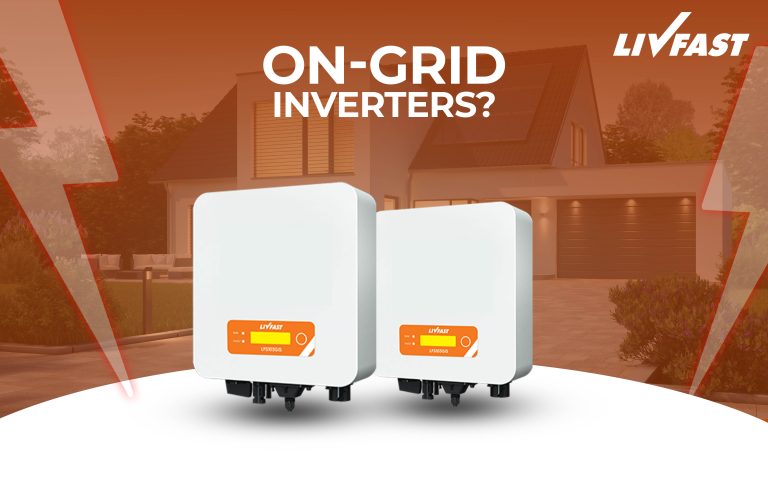
What Is an On-Grid Inverter? Meaning, Working, and Benefits
Home What Is an On-Grid Inverter? Meaning, Working, and Benefits by If you are thinking of buying solar, you will get to know about on-grid inverters. An on-grid inverter lets the electricity your panels give out be used with the public power supply. It changes the direct current (DC) from your solar panels into alternating current (AC). Your home and the electricity grid can only use AC power. This makes it easy for your home to use solar power in a simple and smooth way. So let’s explore what is on grid inverter is and how it works. What is A Grid Tie Inverter: On grid Inverter Meaning On-grid inverters are connected to your main electricity grid. When your solar panels give out more power than you need, the extra electricity is sent back to the grid. When your panels do not give enough, you take power from the grid. It helps you use your solar power in the best way and it is a simple way to use it that anyone can understand. You also stay connected to the main power supply when needed. Easy Steps to Understand How an On-Grid Inverter Works Here is how on grid inverter works: Your solar panels make DC electricity. The on-grid inverter changes this DC into AC and matches it with the grid’s power. Your home uses this AC power first. If there is extra, it goes to the grid. If your panels do not make enough power, the grid gives you the rest automatically. Safety systems stop the flow of power during a grid problem or power cut to keep everyone safe. Components of an On-Grid Solar Inverter Solar panels: Generate DC On-grid inverter: Converts and synchronises power Net meter or export meter: Track energy you send to the grid Main distribution board: Directs power inside your house. These parts together explain what is on grid solar inverter in practice. Comparing On-grid vs Off-grid vs Hybrid Systems Here is an easy comparison of the solar: Feature On-grid Off-grid Hybrid Battery storage Not required Required Optional Works during power cut No Yes Sometimes Exports surplus to grid Yes No May be possible Cost Lower Higher Highest Best for Reducing bills, simple set ups Remote areas Homes wanting backup Use this table as it helps you see which system suits your home best. Benefits of On-Grid Inverter When people ask benefits of on grid solar inverter, these points come up most often: Lower cost: You do not need batteries. So the setup costs less. Lower bills: Extra solar power given to the grid can reduce your electricity bill. Better performance: Modern inverters use MPPT. With this, you can get more power from your panels. Easy to use: They have fewer parts, so they are simple to run and need little maintenance. These are the on grid inverter advantages you should know about. What You Should Know Before Choosing an On-Grid System An on-grid system will not give power during a grid outage. For this, you can add a hybrid inverter that has storage. That is due to anti-islanding safety rules. Export rules, net-metering rates and approvals vary by state and utility. You need to check the local rules before you make a choice. You need to choose an solar inverter with a wide MPPT range and features to monitor. That helps you get the best use out of your solar panels. These all help you to know what is on grid inverter and you can make an easy decision. Why Livfast On-Grid Inverters Are a Smart Choice Livfast builds solar grid-interactive inverters designed for Indian homes. Their units offer wide MPPT ranges, low night-time self-consumption and smart monitoring. If you want a system that is efficient, easy to manage and focused on exporting surplus where allowed, a Livfast on-grid inverter is a practical option to consider. They are built to deliver stable performance even during changing weather conditions. Summing Up Understanding what is on grid inverter is important for you. An on-grid inverter helps your solar panels make electricity and your home and the power grid can use it. It is a good choice if you want to lower your electricity bills and stay connected to the grid. You do not have to use batteries for anything. A hybrid system can be more helpful if your area has many power cuts and you need backup. Choosing the right system will give you better performance from your solar every day. It also makes sure your solar power works safely and smoothly. Related Blogs What is an Inverter? Inverter Battery Life Explained Sine Wave vs Square Wave Inverter Parts of an Inverter Understand on-grid, off-grid, hybrid inverters FAQ’s General Does an on-grid inverter work without a battery? Yes. It can work without a battery. It sends more power to the grid and takes power from the grid when needed. Is this Helpful? Are a grid-tie inverter and an on-grid inverter the same? Yes. Both are the same and work with the main power grid. They are just two names people use for the same inverter. Is this Helpful? Does an on-grid inverter work in a power cut? No. It stops working during a power cut for safety. It shuts down, so no power goes back into the grid by mistake. Is this Helpful? How do I send extra solar power to the grid? Your inverter and meter track the extra power you send. Check your state’s net-metering rules to see how you get credits. Is this Helpful? How long does an on-grid inverter last? A good on-grid inverter usually lasts 10 to 15 years. Just give it basic cleaning and simple checks to last longer. Is this Helpful? Do on-grid inverters need much maintenance? No. They need very little care. You just need to clean them, do simple checks and basic monitoring. Is this Helpful? Does an on-grid inverter work without a battery? Yes. It can work without a battery. It sends more power
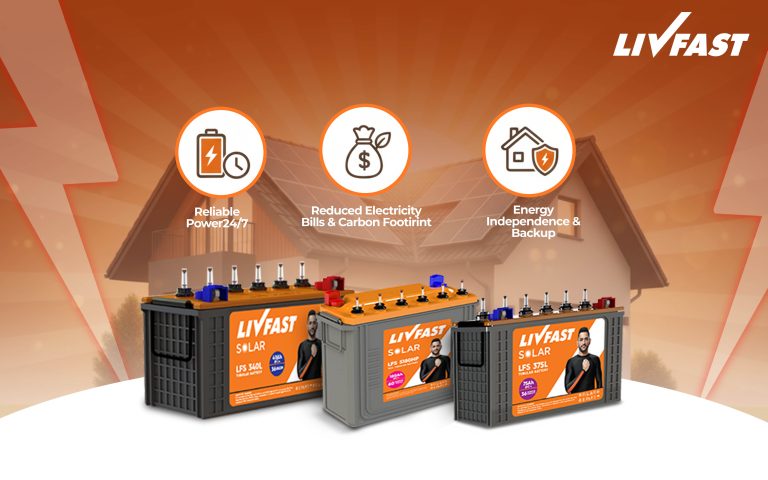
Benefits of Solar Batteries: Why They’re Essential for Energy Storage?
Home Benefits of Solar Batteries: Why They’re Essential for Energy Storage? by The solar panels generate the electricity, but you need to store it somewhere, just like cooked food needs utensils to store, the same applies to the power generated by solar panels. They are stored in solar cells. Primarily serving the purpose of storage, there are several benefits of solar batteries too, which is why in this article, we’ll dive deep into the battery storage for solar, and its benefits. What Is a Solar Battery? A solar battery is used to store excess electricity generated by solar panels so it can be used later when sunlight isn’t available, such as at night or during power cuts. Solar panels produce electricity in Direct Current (DC) form. This DC power is stored as DC inside the solar battery. When your home needs electricity, the stored DC power is then converted into Alternating Current (AC) by an inverter to make it suitable for use. Earlier, solar batteries were bulky and less practical for residential use. Today, thanks to advancements in technology, they are compact, efficient, and smart. They are a reliable solution for storing solar energy at home. The battery stores energy generated during the day so it can be used later. This helps reduce dependence on the grid and improve energy efficiency. Why Solar Batteries Are Essential: Benefits of Solar Batteries Explained This brings a new question: Why are they essential? Well, they are essential due to the fact that you need them if you choose to install a solar power system. But in addition to that, some of its benefits are: Benefit Area Explanation 24/7 Power Availability Your solar system stores extra energy during the day, so you always have power whenever you need it — especially at night. Lower Electricity Bills Instead of buying expensive grid power, you simply use what your system stored. Energy Independence You don’t have to rely on an unstable grid or noisy generators — perfect if you live in an area with frequent outages. Maximised Solar ROI Every unit your panels generate gets used smartly; Livfast batteries offer long cycle life, giving you more value over the years. Stable Power for Appliances Your devices stay protected from voltage swings when you invest in options like those from Livfast that integrate technology to keep the power output steady and safe. Types of Solar Batteries Did you know that there are not 1, but multiple types of Solar batteries? Lead-acid batteries Lead-acid batteries are the most reliable type of solar battery. People have been using these deep-cycle batteries to store energy for a long time, since the 1800s. And they’ve been able to stay around because they are reliable. There are two basic kinds of lead-acid batteries: sealed lead-acid batteries and flooded lead-acid batteries. Lithium-ion batteries Lithium-ion batteries are the newest type of energy storage. As electric cars became more popular, EV makers saw the promise of lithium-ion as a way to store energy. They immediately became one of the most popular solar battery banks. One of the concerning things about lithium-ion batteries is that they cost more than alternative ways to store energy. Nickel-cadmium batteries Lead-acid and lithium-ion batteries are more common than nickel-cadmium (Ni-Cd) batteries. Ni-Cd batteries first appeared in the late 1800s, but they were changed in the 1980s to hold considerably more energy. People in the aircraft business really like them. Flow batteries In the field of energy storage, flow batteries are a new technology. There are two distinct chambers, or tanks, in the battery that hold a water-based electrolyte liquid that flows between them. When charged, chemical events happen that let the energy be stored and then released. People are starting to like these batteries more and more. Because they are bigger, they cost more than the other types of batteries. Because they are so big and expensive, it is challenging to use them in homes. Conclusion There are a lot of benefits to using proper solar batteries. Looking for long-lasting solutions? Livfast’s solar battery range can be your perfect choice. They’re quite durable and will last you for a long time to come, as they come with: Super Tuff 3D Grid Design: Double-sided pasting for higher durability and longer battery life Superior Life Cycle: Up to 2000 cycles at 80% DoD for long-lasting performance Tuff Futuristic Design: Built with high-strength materials for reliable operation in all conditions Ultra Low Maintenance: Topping-up required only once every 8–10 months So, when we say, “Reliable Hai Toh Hai”, we mean it! Related Blogs Advantages of Solar Panels How Solar Panels Work? Do Solar Panels Work at Night? Benefits of Solar Charge Controllers FAQ’s General Do I need a solar battery for rooftop solar? Yes, especially if you want backup power or off-grid capability. Is this Helpful? How long does a solar battery last? Good batteries (like Livfast) last several years with proper care. Is this Helpful? Can I upgrade later? Yes, most systems allow easy expansion. Is this Helpful? Are solar batteries expensive? They pay for themselves through long-term savings and reliability. Is this Helpful? Do I need a solar battery for rooftop solar? Yes, especially if you want backup power or off-grid capability. Is this Helpful? How long does a solar battery last? Good batteries (like Livfast) last several years with proper care. Is this Helpful? Can I upgrade later? Yes, most systems allow easy expansion. Is this Helpful? Are solar batteries expensive? They pay for themselves through long-term savings and reliability. Is this Helpful? Yes, especially if you want backup power or off-grid capability. Is this Helpful? Good batteries (like Livfast) last several years with proper care. Is this Helpful? Yes, most systems allow easy expansion. Is this Helpful? They pay for themselves through long-term savings and reliability. Is this Helpful? What is the life of a rooftop solar system? A Solar Rooftop module comprises minimal moving parts and hence has very low maintenance cost. SolarSquare Energy provides first 5-year
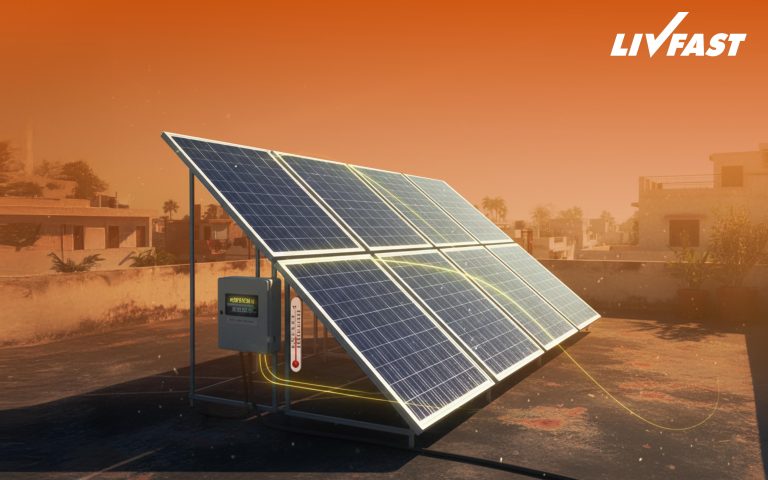
How Much Power Can Solar Panels Generate in Indian Summers?
Home How Much Power Can Solar Panels Generate in Indian Summers? by Growing up, we all have read poems about summer being this beautiful season of enjoyment, joy, and kindness. Still, as Indians, those poems aren’t exactly relatable to us, as summer is anything but kind and joyous as the poems make it out to be. They bring with them unbearable heat and uncontrollable sweating, which, when paired with high electricity bills, is a recipe no one likes. Which is why our Government of India decided to turn this scorching summer heat into an opportunity, and gave subsidies for installing solar panels, and a lot of people have installed solar panels in the last few years. But a question that lingers a lot is “how much energy does a solar panel produce?” To answer this question, in this article, we’ll be talking about clear numbers, simple examples, and practical guidance. Understanding Peak Sun Hours Before we get into the talk of how much electricity a solar panel produces, we need to first understand the peak sun hours of India. While Indian weather is explicitly varying from region to region, most of the country gets nearly 40-50 degrees in the summer, and gets similar temperatures for 6-7 hours a day. The peak is obviously around 12:00 PM. How to Estimate Power Generation Now, to determine how much a solar panel can generate electricity, you need to do the math. Here is a simple formula: Daily Solar Output = System Size (kW) × Peak Sun Hours × System Efficiency Example Calculations for Indian Summers Here are some example calculations to help you understand this better. System Size Sun Hours Daily Generation (Units/day) Monthly Generation (Units/month) 1 kW 4 hours (Conservative) ~4 units/day ~120 units/month 1 kW 5.5 hours (Average) ~5.5 units/day ~165 units/month 1 kW 6.5 hours (Optimistic) ~6.5 units/day ~195 units/month 3 kW 4 hours (Conservative) ~12 units/day ~360 units/month 3 kW 5.5 hours (Average) ~16.5 units/day ~495 units/month 3 kW 6.5 hours (Optimistic) ~19.5 units/day ~585 units/month 5 kW 4 hours (Conservative) ~20 units/day ~600 units/month 5 kW 5.5 hours (Average) ~27.5 units/day ~825 units/month 5 kW 6.5 hours (Optimistic) ~32.5 units/day ~975 units/month You achieve the closest to this number when you use Livfast solar panels, as they are designed for maximum efficiency, plus they are quite durable and sturdy. Factors That Affect Solar Output in Summer Now, while these numbers are accurate, they’re calculated based on an assumption that the sunlight is exactly what’s taken, which is often not the case. There are factors that affect the production capacity of the solar panel by great margins, and they need to be taken into consideration before we get our own solar panels. Location & weather Roof direction and tilt Cooling/airflow under panels Shading from trees/buildings Dust accumulation Panel quality Inverter efficiency Now, this does not mean that these things are not controllable, they need to be taken care of for maximum efficiency. When paired with Livfast systems, they work better as they are optimised for harsh Indian summers and dusty environments. How Livfast Maximises Power Generation in Hot Weather Livfast Advantage What It Means for You High-efficiency solar panels Strong power output even in peak summer sunlight, giving you more units per day. Advanced MPPT inverters Extracts maximum possible energy from every solar panel, reducing losses. Heat-resistant, durable design Reliable performance even during extreme Indian temperatures. Fast charging & stable operation Quick battery recharge and consistent power during voltage fluctuations. Long life with low maintenance Fewer issues, steady generation, and lower overall lifetime cost. Practical Tips to Boost Summer Solar Output The best time to use your high-consumption appliances is when you’re home during the day and can see that your solar system is working well. When the sun is at its greatest, you can turn on your washing machine, dishwasher, or tumble dryer and power them straight from your solar system instead of from the grid or your batteries. If you want to get the most out of your solar power, you should spread these appliances out throughout the course of the day. This helps you use energy more evenly and makes sure your solar panels are always covering the load. This will lessen the stress on your battery and the need to get energy from the grid at night. Most of the time, when you use it at night, you’ll just be powering things that don’t require much electricity, which will cut your overall bill even more. The most important thing is to use as much of your solar electricity as you can instead of sending it back to the grid. Conclusion So there you have it! You now know the answer to “how much energy does a solar panel produce?” and the key factors that affect its output. By following the right efficiency-boosting practices and choosing reliable solutions like Livfast Solar Panels and solar inverters, you can maximise performance and get the best value from your investment. Related Blogs Advantages of Solar Panels How Solar Panels Work? Do Solar Panels Work at Night? Benefits of Solar Charge Controllers FAQ’s General How much energy does a solar panel produce a day? The amount of electricity that solar panels make varies a lot. A single panel (around 350–400W) might make 1.2 to 2 kWh per day, while a 3kW system can make 12–15 kWh per day in bright sun. The amount of electricity that a system makes depends a lot on the hours of sunshine, location, efficiency, tilt, and weather. Is this Helpful? Is 7 kW enough to run a house? Yes, a 7,000W (7kW) generator should be enough to power most Indian households. Is this Helpful? What is the 20% rule for solar panels? The 20% rule says that your solar panels should give you 20% more electricity than your home normally needs. It helps keep the power on when it’s foggy or when people use a lot of it. Is this Helpful? How much
What Is a Pure Sine Wave Inverter and Why Do You Need One?
Home What Is a Pure Sine Wave Inverter and Why Do You Need One? by Digital gadgets and appliances have embedded themselves into our lives. We use them at the start, the end and throughout our day. We need them for work, study and sometimes, during downtime too. Every single one of them relies on electricity in varying capacities. Parallely, this means that a single long stretched power outage can paralyse our daily functions. Work and study can come to a halt, and businesses might suffer losses. To avoid an operational disaster of that scale, inverters were developed. Fitted with batteries that store electricity, they step into action during outages and there, our day is saved. Pure Sine Wave Inverter: What It Is Pure sine wave inverters get their name due to the pure sine waves involved in their power conversion process. The power conversion process in pure sine wave inverters generates a continuous waveform known as the pure sine wave. That is how these inverters get their name. Like any inverter device, a pure sine wave inverter converts DC (Direct Current) power stored in the battery into AC (Alternating Current) power for the household. The current produced resembles the waveform of the power that flows through the main electricity grid. It ensures that a steady and clean supply of electricity keeps your appliance functioning without disruptions or damage. These devices cater to the power requirements of common or frequently used appliances in homes and commercial spaces. Laptops, refrigerators, and sensitive equipment require a smooth flow of AC power. Marked by a rise and fall in the electrical current, also known as a pure sine wave, these inverters are the most prominent power backup system of the day. How Does a Pure Sine Wave Inverter Work? Now that you have the answer to “what is pure sine wave inverter”, let’s understand how these devices work. Possessing a clear answer to the question “what is pure sine wave inverter” has to be followed by an understanding of how exactly these devices work. Whether you need an inverter to convert solar power from your PV (photovoltaic) system or get consistent electricity during outages, the workings are important. The following steps are involved in the successful operation of a pure sine wave inverter: Step 1 DC Input DC electricity functions the way river streams do. They flow in a single direction. A solar panel is integrated with the PV system in your home that converts raw solar energy into DC power. Inverter batteries, even in homes without solar panels, store electricity in the form of direct current. This is the starting point of the conversion process. Step 2 Conversion The electrical components fitted within the inverter stir into action on receiving the DC input. A mechanism called Pulse Width Modulation acts on the DC electricity to chop it into pulses. This occurs by repeatedly turning the direct current on and off through the use of transistors. When the resultant pulses are combined at the end of the process, they form a waveform. Step 3 Wave Filtering Inductors and capacitors inside the inverter filter the choppy AC output. This turns them into smooth, clean waves like those of the main utility grid. Step 4 Switching Circuits Once a natural, smooth sine wave has been achieved, the inverter amplifies the voltage and frequency depending on the electricity required by the appliance. The AC output can now power a wide range of appliances in your household. By combining different components within the inverter, your device works promptly to make dependable electrical output available in times of power cuts. Comparison Between a Pure Sine Wave Inverter and Other Inverters Pure sine wave inverters are a popular choice among inverters due to their overarching benefits in comparison to other inverters. Parameter Pure Sine Wave Inverter Other Inverters Waveform Smooth waveform with steady rise and fall. It resembles the current from the utility grid Block/square-shaped, rough waveform quality Equipment Compatibility Compatible with a wide range of devices, including sensitive electronic appliances Compatible with limited appliances and might not be fit for sensitive devices Efficiency More efficient due to smooth AC output Might not be very efficient Harmonic Distortions Low harmonic distortions facilitate the supply of a clean electric current High harmonic distortions that strain devices Temperature Regulation Seamless conversion of grid-like power ensures that devices run cool Choppy electrical output strains devices, makes them work longer and can easily heat appliances Cost Higher upfront cost with high returns in the long run Low upfront cost with potential complications in the long run Why You Need a Pure Sine Wave Inverter As the number of homes and buildings ramps up, the demand for power supply escalates too. It is one of the primary reasons that several places, especially rural areas, tend to get plagued by outages more often than urban ones. There is much to gain from installing an inverter if you live in an area that frequently faces instances of load shedding or power cuts. Reliable Power Output The smooth conversion process of DC electricity into AC output in a pure sine wave inverter ensures that the power being supplied to your home is clean. It has low harmonic distortions and a fine waveform. A combination of these two enables a continued and dependable power supply during outages. Safety and Efficiency A pure sine wave inverter is considered a trusted power backup device due to its efficiency in keeping appliances running steady and for long durations. The battery delivers high performance and does an orderly job of powering sensitive appliances. Moreover, the hazards involved in using pure sine wave inverters are significantly less than any other power backup system. It is safe, systematic and stable. Silent Operation Low harmonic distortions are produced during the conversion process in pure sine wave inverters. As a result, no unwanted or additional frequencies get added to the flow of current. The stable and clean output can thus power appliances without any unwanted

Common Car Battery Problems and Fixes: A Handy Guide
Home Common Car Battery Problems and Fixes: A Handy Guide by You were packed and ready for the annual road trip. The sandwiches were baked and stuffed in the morning. The sleeping bags of all members were squeezed into the trunk, too. What’s more? You had pre-saved the playlist so that nobody could ask for the aux. And now the engine refuses to turn on, no matter how many times you attempt ignition. Your battery has run into trouble, and at this point, even a ghastly nightmare seems nothing in comparison. If these are your circumstances, this guide can help. Car batteries tend to become faulty, and figuring out what has caused the problem can be stressful. Additionally, fixing the problem post-diagnosis is not the simplest either. But with enough awareness, you can tackle your car battery issue and ride into the sunset for that trip with nothing holding you back. How Car Batteries Work? You can easily spot a car battery problem if you have a grasp of how they actually work. Batteries are fitted with several parts that work together to kickstart your engine. It is the same operation that supplies the appliances inside the car with power. Batteries or lead-acid batteries sit soaked in a chemical solution called electrolyte. It is basically a combination of water and sulfuric acid. These components are responsible for releasing electrons on interaction, which generate electricity. When you turn the key, the reaction is set in motion. The produced electrons generate electricity, which then powers the starter motor, and subsequently the engine of the car. Once the engine has begun running independently, the alternator of car takes over. It keeps the car battery charged and in top-tier condition until it is needed again. In case of a battery issue, whether it’s damage or quick draining, you can tell that the device is unable to carry out the usual process. Subsequently, the engine cannot get its due power to start, let alone appliances. Most Common Causes of Battery Problems in Car A car battery problem may be caused by more than one reason. You can diagnose the problem by yourself when you’re aware of the possibilities. Here are a few of the most common reasons that your battery might have run into trouble: Ageing of the Battery Every battery undergoes a natural wear and tear process. So as your car battery ages, its internal parts can begin to disintegrate. Even if your alternator is in top condition, the battery will not be able to hold a charge. In the best-case scenario, it will drain quickly. So if it has been a while since you got the battery changed, you know why it is malfunctioning. Generally, car dealers advise replacing your battery every 3-5 years. Still, you can get a new one in case your battery has died early. Fix: Purchase a strong battery and get the drained one replaced with it Make sure to monitor the water levels to avoid early battery death Extreme Temperatures The components in your car’s battery act in tandem with the chemical solution in which it is placed to power the engine. And as we know, chemical solutions are sensitive to temperature fluctuations. Extreme heat or cold can affect the chemical reaction, along with the production of electrons. Exposure to hot temperatures can vaporise the chemical solution of the battery. Subsequently, exposure to extreme cold will adversely impact the battery’s ability to hold a charge for long durations. Fix: Explore adaptive batteries that can adjust to extreme temperatures without damage Make sure to park your car in a secure place to avoid subjecting the battery to extreme weather conditions Active Appliances Your vehicle might run into a car battery problem if the lights and appliances are left on in it frequently. Since a lot of cars possess an integrated mechanism for turning appliances off when the ignition is turned off, people make the mistake of not checking twice. Not all cars, however, are equipped with such an automatic feature. You need to manually ensure that radios, lights or any other appliances cannot drain your battery overnight. Fix: Make sure that you turn off all appliances before exiting the car. Double-check the headlights and air conditioner. You can also look for signals on the dashboard to be certain that everything has been turned off. High Idle Time Car dealers flag a specific driving habit when you’re purchasing a vehicle. They advise against short trips. When your car battery is in use for a long time, the alternator is able to charge it fully. It’s like how in most electronic battery-fitted gadgets, usage promotes longevity. So, the lower the idle time of your car and its battery, the later it’ll begin to drain. Fix: Do not make short journeys in your car. Go for long drives or trips in your car so your battery remains in use and the alternator is able to recharge it to its full capacity. Corrosion Your car battery problem can arise from battery life being slashed short by corrosion. If the plates in your battery have begun to rust or the terminals have come loose, the battery will no longer be able to hold a charge. It will drain quickly, even if it’s in the middle of use. Fix: Ensure cleaning of the terminals from time to time. Get the internal components of the battery checked for loose connections or breakage. In case you’re unable to fix the car battery problem or it does not fall under this list, seek professional help. Avoid poking around under the hood unless you’re familiar with their workings. It could potentially lead to more complications with the battery. Tips For Car Battery Maintenance A few simple maintenance habits can keep your battery healthy and operational for the promised duration of time. Drive your car regularly to keep the battery components and alternator functioning well. Limit the load being put on your battery due to the overuse of appliances.
What Is the Difference Between Inverter and UPS? Full Guide
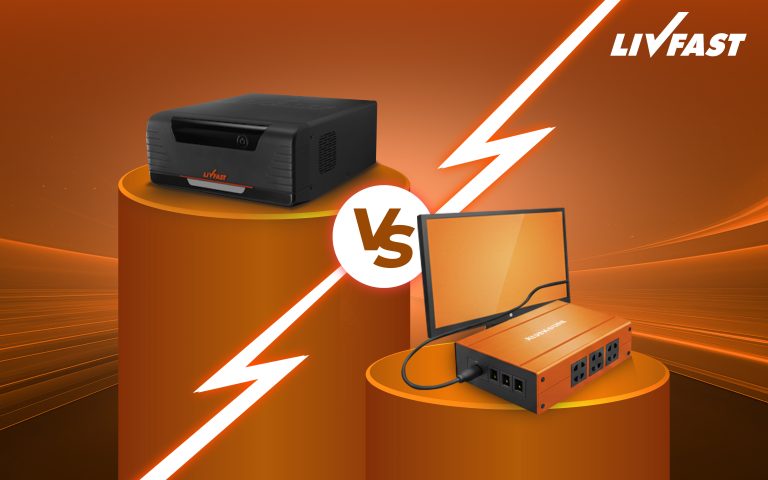
Home What Is the Difference Between an Inverter and a UPS? by Inverter and UPS! These two come up every time the lights flicker or the power disappears. They are tossed around together as most people assume they do the same job. They do share some similar traits and help during outages, but they work very differently. One is all about instant action and zero interruption, while the other is all about long backup and steady support. This mix of similarities and differences is what confuses people most. If you also want to clear this confusion and understand the inverter vs UPS scenario and what makes them unique, this blog will walk you through it. What is an Inverter? Before we jump into the UPS and inverter difference, it is important to understand what each term actually means. So let us begin with understanding the inverter first. An inverter is a device that changes direct current from a battery into alternating current that your appliances can use. It cannot store electricity on its own, so it works with external sources like batteries or a solar setup. Some inverters are standalone units, while others are built into larger power systems. When the power goes out, the inverter provides an AC supply to keep your basic appliances running smoothly. How Does an Inverter Work? Now that we know what an inverter is, let us understand how it works: Step What Happens 1. Battery stores DC The inverter receives power from a connected battery that holds direct current. 2. A power cut occurs When the main supply fails, the inverter senses the loss of power. 3. Switching begins The inverter shifts the load from the main line to the battery. 4. DC is converted It changes the stored DC into AC, which is the usable form for appliances. 5. Appliances run Lights, fans and other connected devices continue working on backup. 6. Battery recharges later Once electricity returns, the inverter charges the battery again. Inverter Applications An inverter helps in: Running home lights and fans during a power cut Powering TVs, routers and basic entertainment units Helping solar panel supply AC power Supporting small shops and home offices What is a UPS? Next, let us understand the second term: the UPS. A UPS, short for uninterruptible power supply, provides instant temporary power when your main supply fails. Its job is to prevent interruptions and keep important electronics safe from sudden shutdowns. How Does a UPS Work? Let us also take a look at how the UPS works: Step What Happens 1. Power Check The UPS keeps monitoring the incoming electricity. 2. Battery Charging The built-in battery stays charged when power is available. 3. Instant Switch When power fails, the UPS instantly shifts to battery mode. 4. Power Supply The battery provides AC power to connected devices. 5. Auto Restore When power returns, the UPS switches back and starts recharging. UPS Applications A UPS helps in: Keeping your Wi-Fi working Shielding devices from sudden voltage bikes and dips Helps medical devices, stay operational in emergencies Keeps computers and laptops running during power cuts Helps officers save important files safely when power drops Major Differences Between UPS and Inverter At this point, it may still feel like both devices serve the same purpose— keeping the power running. But have a closer look at the table below, and you will get the answer for what is the difference between inverter and UPS: Point of difference UPS Inverter Main function Keeps devices running without any pause Converts battery power into usable AC for appliances Power storage Has a built-in battery system Uses an external battery for storage Backup duration Gives short backup for essential devices Offers long backup for home appliances Switching time Switches almost instantly Takes a little time to switch Ideal use Best for sensitive electronics Best for fans, lights and basic appliances Power input range Works on a narrow input range Handles a wider input range Maintenance Needs very little care Needs regular battery checks Circuit design More advanced and compact Simpler and easier to repair Output quality Gives clean and stable power Power may vary slightly Protection level Offers strong protection from voltage issues Gives limited protection from fluctuations Cost More costly More budget-friendly Battery setup Comes with internal battery Depends on external battery banks Noise level Silent in operation Some models can produce slight humming Installation Easy to install and set up Needs more space due to separate battery Application Good for computers and network devices Good for household appliances and lights Which One Should You Choose? Now comes the big question! Which one should you choose? Let us make that easy for you: Choose an inverter if: You deal with long power cuts regularly You want budget-friendly backup power Your usage is mostly household appliances You prefer something easy to maintain Choose a UPS if: You need zero delay power for gadgets You work from home and can’t risk shutdowns You operate sensitive electronic equipments You need a stable voltage output at all times Conclusion We hope by now, your confusion should be long gone. You must have understood that a UPS and an inverter are close cousins, not twins. Sharing a few traits, but definitely not meant for the same jobs. When you’re choosing the smarter solution, always turn towards Livfast. We step into dependable technology tailored for Indian homes. Our inverters and batteries combine speed, durability, and customer-focused engineering to keep your home running without disturbances. Related Blogs What is an Inverter? Inverter Battery Life Explained Sine Wave vs Square Wave Inverter Parts of an Inverter FAQ’s General Which inverter is best for home use? A 600 VA / 12V to 1500 VA / 24V capacity inverter is ideal for the home. Livfast inverters with both Pure Sine & Square Wave technologies are suitable for home use. Is this Helpful? Can I connect the refrigerator to an inverter? Yes. You can connect the refrigerator to an inverter if
How to Calculate Solar ROI for Indian Homes?
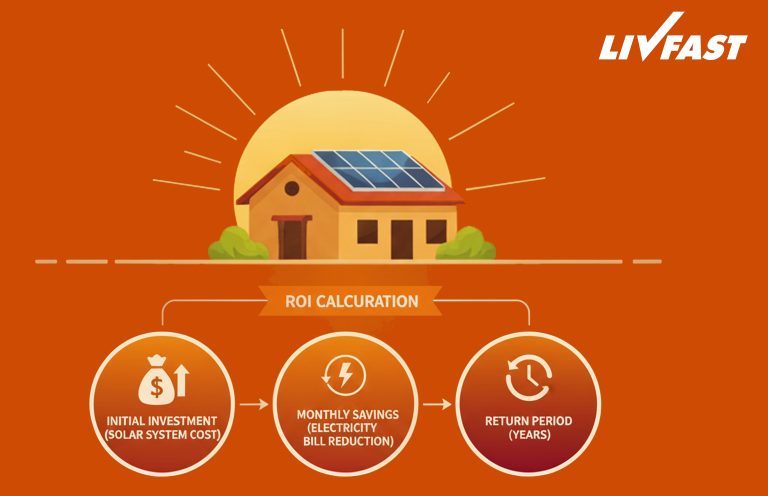
Home How to Calculate Solar ROI for Indian Homes? by Solar adoption in India is rising rapidly, and what is driving it is simple: Savings! More and more Indian households are turning to rooftop solar because it lowers electricity bills, adds to their home value and gives clean energy. But when you are spending on a solar set-up, you naturally want to know one thing.: Is it worth it? That is where ROI comes in. Calculating the return on your solar investment tells you how quickly your system will pay you back, and what kind of savings you can expect long-term. Want to understand all the details about calculating ROI on solar panels for Indian homes? Then read this blog till the end. What is the Meaning of ROI on Solar Panels? Solar panel return on investment is a way to see if spending money is paying off. In solar panels, ROI shows how much money your system returns to you in electricity, saving over time. The higher the ROI, the faster your solar system pays for itself. It is a simple way to measure whether spending on solar is financially smart. A good ROI means your panels quickly earn back the money you spent. ROI tells homeowners if going solar is smart, not just for the environment, but also for the pocket. It turns a cost into a measurable long-term gain. Factors That Affect ROI on Solar Panels Before we dive into calculating solar panel investment return, it is important to understand the key factors that influence it: Key Factor Meaning Upfront Cost The total cost of installing the solar system varies by location, system size, and equipment quality. Electricity Tariffs Higher electricity rates increase the savings from solar, helping you recover the investment faster. Government Subsidies Financial incentives like the PM Surya Ghar Muft Bijli Yojana reduce the initial cost and shorten payback time. Net-Metering Allows homeowners to sell excess power to the grid, increasing overall returns from the solar system. System Efficiency The quality of solar panels and solar inverters determines how much electricity your system produces, affecting ROI. How to Calculate Solar ROI: Step by Step Calculating solar ROI is easy. All you need to do is follow this simple step-by-step method: Step 1: Determine total system cost Include all your expenses, like panels, inverter installation, and maintenance. Subtract any subsidies to get the net cost. Step 2: Annual savings Multiply your systems’ yearly electricity production by your current electricity rate. Step 3: Payback period Divide the net system cost by annual savings. This tells you how many years it will take for your system to pay for itself. Step 4: Lifetime savings Multiply annual savings by the expected system life (usually 25 years). Step 5: ROI percentage Finally, calculate ROI as: ROI % = lifetime savings – cost/cost * 100 Examples Let us quickly understand this, with examples, for both residential and commercial ROI: Residential ROI 4kW system Net cost: ₹1,45,000 Annual savings: ₹40,000 Payback: 3.6 years Lifetime ROI: 520% Commercial ROI 15 KW System Cost. ₹9,60,000. Annual savings: ₹2,80,000 Payback: 3.4 years Lifetime ROI: 290% Tools to Calculate ROI in India There are various tools available for the calculation of solar ROI, like: Solar ROI calculator (online tool) These are quick web-based tools offered by solar companies: They consider: Your state electricity tariff Your rooftop solar potential Applicable subsidies Approx yearly generation Best for homeowners who want instant estimates without doing the maths. Solar ROI Excel calculator This is a downloadable Excel sheet where you manually enter the system size, cost, subsidy, electricity rate, expected generation and payback + ROI formulas. These are best for people who want custom calculations and like comparing multiple scenarios. Commercial solar ROI calculators These tools are designed for businesses and factories. They include demand charges, large-scale, net metering, depreciation benefits and tax incentives. They are best for offices, shops and industrial setups who are looking for accurate financial ROI. Tips to Maximise Your Solar ROI Size it wisely: oversized or undersized set ups reduce returns. Use all subsidies: don’t miss government incentives that cut upfront costs. Invest in reliability: quality equipment, last longer, and generates more. Do routine care: dust free panels = high energy output. Expect price hikes: higher future tariffs mean bigger yearly savings. Residential Vs Commercial ROI To make it easier to compare, here is a quick look at how solar ROI differs for residential and commercial setups in India: Parameter Residential Commercial Payback Period 3–5 years (post subsidy) 3–5 years ROI % 15–20% annually 20–39% annually Lifespan 25+ years 25+ years Savings Avoided electricity bills Reduced bills + possible revenue from energy sales Conclusion So now you know the full picture behind solar ROI and how simple it really is once you understand the basics. For Indian homes, solar brings steady savings, lower bills and long-term security against rising electricity costs. When you size your system correctly and invest in good quality components, you enjoy lower bills and higher savings for decades. If long-term value matters to you, solar power is the way forward. Related Blogs Advantages of Solar Panels How Solar Panels Work? Do Solar Panels Work at Night? Benefits of Solar Charge Controllers FAQ’s General What is the average ROI on solar panels in India? The average ROI on solar panels in India ranges between 18% to 25% annually. This depends upon your location, consumption and subsidiary advantages. Is this Helpful? Do solar panels work when there is no sun? Yes, solar panels work even at night and on cloudy days when there is no sun. Although it works at a lower output, there is still no interruption in your power. Is this Helpful? Do rising electricity tariffs impact ROI? Absolutely. Rising electricity tariffs do impact ROI, making it better every year. As grid electricity becomes more expensive, the amount you save on your bills increases. This shortens your payback period and boosts real-time savings. Is this Helpful? Is solar ROI
What is VA (Volt-Ampere) in inverter?
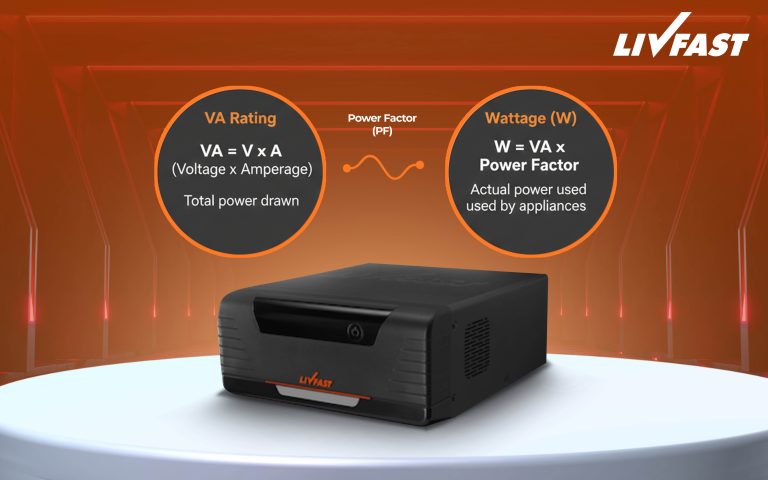
Home What is VA (Volt-Ampere) in an Inverter? by If you have ever shopped for an inverter, you’ve probably noticed two numbers on the box: VA and Watts. The VA rating is skipped by the majority of people as it appears technical, and the salesperson rarely explains it well. However, knowing what VA is and why it matters can, in fact, enable you to choose the right inverter for your house, prevent overload problems, and increase the life of your batteries. In this guide, we’ll break down the VA meaning in inverter systems in the simplest way possible, with some basic examples, and also show why having a trusted brand such as Livfast ensures you get the performance you are paying for. What Does VA Actually Mean in an Inverter? Let’s start with the basics. VA stands for Volt-Ampere and represents the power capacity of an inverter. Simply put, inverter VA means the total load capacity an inverter can handle at a given time. A helpful way to understand the VA meaning in inverter systems is to imagine a water pipe. The pipe can appear large, but the amount of water passing through it is determined by pressure, bends, and resistance. Similarly, any given inverter may be required to handle a specific wattage demand from appliances. Still, the demand it can actually handle is dictated by its VA rating and efficiency. What VA tells you is: “The total load your inverter can support at any moment.” So, if an inverter has a rating of 800 VA, then its apparent maximum load is 800 volt-amperes. But does it mean it can run 800 watts? This is where people often get confused. VA vs Watts: Why They Are Not the Same The majority of appliances display their requirement in watts, whereas inverters display their capacity in VA. Why the difference? While VA (Volt-Ampere) represents the total apparent power an inverter can supply, Watts represent the actual usable power consumed by appliances. The gap between the two exists due to efficiency losses, commonly explained by the power factor. VA vs Watts Comparison Table Aspect VA (Volt-Ampere) Watts (W) What it represents Apparent power Real, usable power Used by Inverter ratings Appliance ratings Depends on the power factor? Yes Already adjusted Practical meaning Total capacity Actual consumption A simple way to see it: In case your inverter is rated at 1000 VA And has a power factor of 0.7 (typical of homes) The usable wattage = 1000 × 0.7 = 700 watts That means your “1000 VA” inverter can actually run only around 700 watts of appliances at a time. This is why understanding the VA meaning in inverter selection becomes important. Selecting it due to its wattage alone can result in an overload or low performance. Why VA Rating Matters in a Real Home? Let’s take a simple example you can relate to. Suppose you want to run: 2 tube lights (40 W each) 2 fans (75 W each) 1 Wi-Fi router (10 W) Total wattage = 240 watts. But this doesn’t mean a 240 VA inverter will work for you. When you apply the typical power factor of 0.7, the inverter capacity required becomes: 240 ÷ 0.7 = 343 VA This means you need at least a 400 VA inverter. However, the majority of homes buy a larger inverter, such as 600 or 700 VA, since they can always add another fan or light as necessary. Livfast inverters are engineered to be efficient in the conversion of power, that is, higher usable wattage on the same VA rating. How VA Rating Affects Performance and Battery Life? The majority of people believe that battery life depends on battery capacity. However, when you mismatch the VA rating of the inverter and the load you wish to run, the battery will run out quicker, overheat, or even fail prematurely. Here’s how VA affects real usage: Higher VA = Less Strain During Power Cuts Your inverter doesn’t have to “struggle” if the load is well within its capacity. Better VA Matching = Longer Battery Life The right-sized inverter minimises the deep discharges, which means a longer battery. Stable Output = Safe Appliances Overloading a small inverter exposes your fans, lights, and electronics to inconsistent voltage. Livfast inverters are designed to stabilise the output even in cases when the load changes abruptly. VA Rating and Appliance Compatibility Different appliances behave differently when they start up. For example: Fans have a higher starting surge. LED lights have negligible surge. Mixers and grinders spike sharply for a few seconds. It implies that your inverter needs to be powerful enough (in VA capacity) to be able to deal with these short peaks. Why High-Quality Brands Use Higher VA Ratings? A less expensive inverter may advertise a particular VA rating and might not even achieve the power factor in actual use. You may find that there are lights dimming or fans that are running slower when there is a heavy load. Livfast inverters, on the other hand, are built to: Maintain stable voltage even during sudden load spikes Convert power efficiently Support sensitive electronics Protect against overload and overheating This is where understanding the VA meaning in inverter shopping helps. You understand why a good quality unit works better in a real-life scenario. Conclusion You don’t have to be an engineer to choose the right inverter. All you really need is a clear understanding of the VA meaning in inverter systems. It tells you what load the inverter is capable of, how efficiently it converts power, and how well it will perform in real-world situations like power failure, peak power, or surge loading of a power appliance. A well-matched inverter-battery setup lasts longer, runs safer, and provides smoother backup. And this is where Livfast makes a difference. Our inverters and batteries are designed with smart power handling, efficient conversion, and strong surge management, so you get more usable power from every unit of VA. When you choose the right VA
Does Using an Inverter Increase Your Electricity Bill?
Home Does Using an Inverter Increase Your Electricity Bill? by With power cuts being a regular occurrence in India now, a lot of people have shifted towards inverter power systems for their energy security. Still, one thing which a lot of people don’t understand, and is the big reason why a lot of people hesitate to get inverters, is does inverter increases electricity bill? This question has been a concern for everyone for quite some time now, which is why in this article, we’ll dive deep into how an inverter works and whether or not it actually impacts your electricity bill. What an Inverter Actually Does? Before we get into the fact does inverter consume more electricity, let us first understand how inverters work. Using electronic circuits, an inverter changes DC electricity into AC power. It usually uses switching and modulation methods to turn a DC input into an AC waveform. Transistors, transformers, and control systems can all be part of these circuits to make sure the conversion process goes smoothly. When paired with batteries, it stores electricity in a battery and supplies AC power when the grid goes off. There are different kinds of inverters, such as: Pure sine wave inverters: Pure sine wave inverters generate high-quality AC power that is safe for delicate equipment. Modified sine wave inverters: Modified sine wave inverters are cheaper and work with less sensitive devices. Square wave inverters: Square wave inverters are the cheapest, but they may not work with all devices. The Difference between Generators and Inverters A lot of people confuse generators with Inverters, while both are intrinsically different. Feature Inverter Generator How it works Converts DC (from battery/solar) into AC power Produces AC power by burning fuel (petrol/diesel/gas) Power Source Battery or solar panels Petrol, diesel, kerosene, LPG, CNG Noise Level Almost silent Loud and noisy Emissions No fumes, eco-friendly Emits smoke, CO₂, and pollutants Running Cost Very low (just battery charging) High (fuel cost + maintenance) Ideal For Homes, small offices, electronics, WiFi, lights, fans Large appliances, heavy loads, outdoor sites Power Output Low to medium Medium to very high Maintenance Minimal (battery care) High (oil change, filters, fuel system) Backup Duration Limited to battery size As long as fuel is available Start Method Automatic/instant Manual or electric start Best Use Case Quiet, clean backup for homes Powering heavy equipment or long outages Does Inverter Increase Electricity Bill Now, the main question is: will inverter increase electricity bill? Here’s a straightforward answer: If you do not use an inverter that is too big or not efficient, it won’t directly raise your electricity bill. Modern inverters are made to use as little electricity as possible while still providing solid backup. To save energy, make sure your inverter is the right size for your needs, keep its batteries charged, and don’t overload it. Using appliances that are linked to the inverter in an energy-efficient way can also help keep electricity costs down. Recharging the battery: When the power goes off, inverters use electricity to charge the battery back up. Power use changes: High-capacity inverters may use more power than low-capacity ones. Models that save energy: Picking inverters that save energy helps cut down on extra power use. Standby power: Inverters utilise a small amount of electricity even when nothing is plugged into them. Size of the inverter: Bigger inverters, especially those made for higher capacity, usually use more power to work. Energy-saving features: Many modern inverters offer modes that save energy by using less power when they aren’t being used or when the load is light. The amount of energy an inverter uses depends on a number of things, such as its capacity, battery efficiency, and how long power outages last. Inverters with a lot of power use more electricity to charge their batteries, and outages make them work harder. Older or poorly maintained inverters may also be less efficient, which might make your electricity bills go up. How Livfast Inverters Minimise Electricity Consumption? The Inverters from Livfast come with several benefits, which directly or indirectly contribute in reducing the energy bills. Benefit What It Means for You High efficiency (90–95%) More of the power goes into running your appliances, not getting wasted. Lower heat loss The inverter stays cooler and uses less electricity overall. Smart charging tech Charges the battery only as needed—no overcharging, no extra units wasted. Low standby consumption Even when idle, it sips very little power. Fast-recharge tubular batteries The battery fills up quicker and draws fewer units from the grid. Durable components Fewer charging cycles needed → longer life → lower long-term cost. Long lifespan & reliability Less spending on replacements and maintenance over the years. How to Reduce Your Electricity Bill While Using an Inverter? If you want to reduce your electricity consumption further, the best thing to do is follow the following tips to make sure your inverter doesn’t consume much electricity, and your overall inverter bill is reduced. When you need backup, use LED lights instead of CFL or halogen. Don’t use heavy appliances like irons, mixers, or kettles on backup. For the best efficiency, pick Livfast pure sine wave inverters. To get the best performance out of the battery, take care of it periodically. When the power goes off, turn off devices you don’t need. Make sure there is enough air flow around the inverter to keep it from losing heat. Conclusion So, does inverter increase electricity bill? The short answer is no, not significantly, when used correctly. An inverter only consumes electricity to recharge its battery. With the right capacity, proper usage, and energy-efficient appliances, this impact remains minimal. The key is to run only essential loads during power cuts and avoid overloading the system. Choosing high-efficiency solutions like Livfast pure sine wave inverters further helps minimise power loss. Opt for reliable backup now without adding unnecessary units to your electricity bill! Related BlogsWhat is an Inverter?Inverter Battery Life ExplainedSine Wave vs Square Wave InverterParts of an InverterBest inverter for